EN
EN
Scaling web scraping tasks and managing multiple social accounts can often trigger strict anti-bot systems. When websites detect unusual traffic patterns or inconsistent fingerprints, you may face CAPTCHAs, restricted access, or account issues. These interruptions can disrupt workflows, delay data gathering, and increase operational overhead due to high request failure rates.
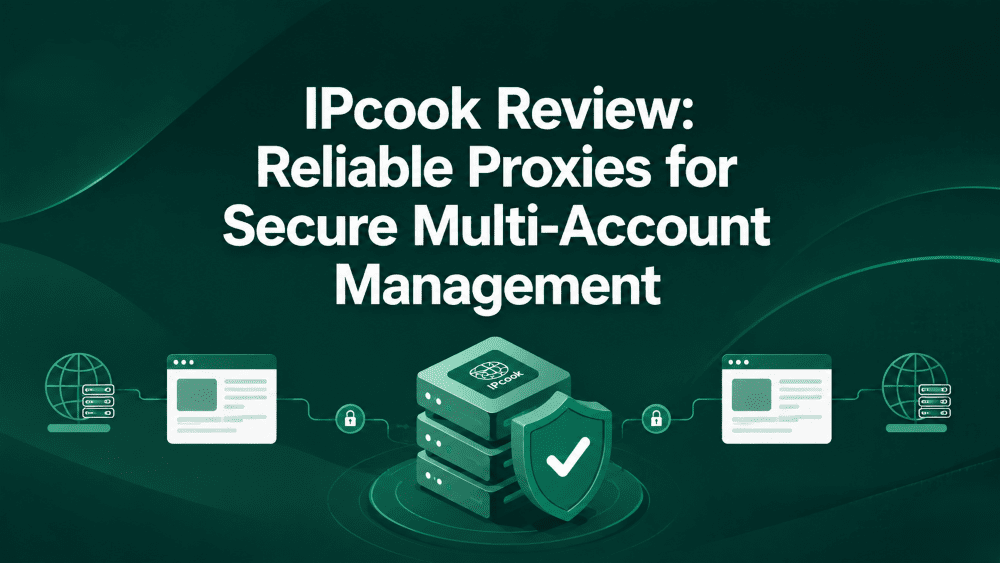
IPcook is becoming a popular option for teams navigating these connectivity challenges. By focusing on connection stability, routing efficiency, and IP quality, IPcook helps teams complete scraping, research, and account management tasks with fewer connection failures. This detailed review evaluates IPcook’s actual proxy performance, key features, and pricing structures to help you decide if the provider fits your needs.
IPcook is a global proxy provider specializing in three core network solutions: residential, ISP, and datacenter proxies. These three proxy types are built to support diverse online operations, ranging from automated data workflows to secure multi-account management. Each solution delivers low-latency performance and high success rates across diverse target websites.
The provider maintains clean IP pools and stable routing paths across its global network infrastructure. By delivering highly responsive nodes, IPcook minimizes request drops and timeouts during continuous daily workloads. This network stability ensures that marketing and data teams achieve high success rates and consistent performance during large-scale operations.
IPcook’s three proxy types each have distinct technical characteristics. Depending on your project requirements, you can select the ideal option to balance connection speed, operational cost, and IP trust scores for your specific workflows.
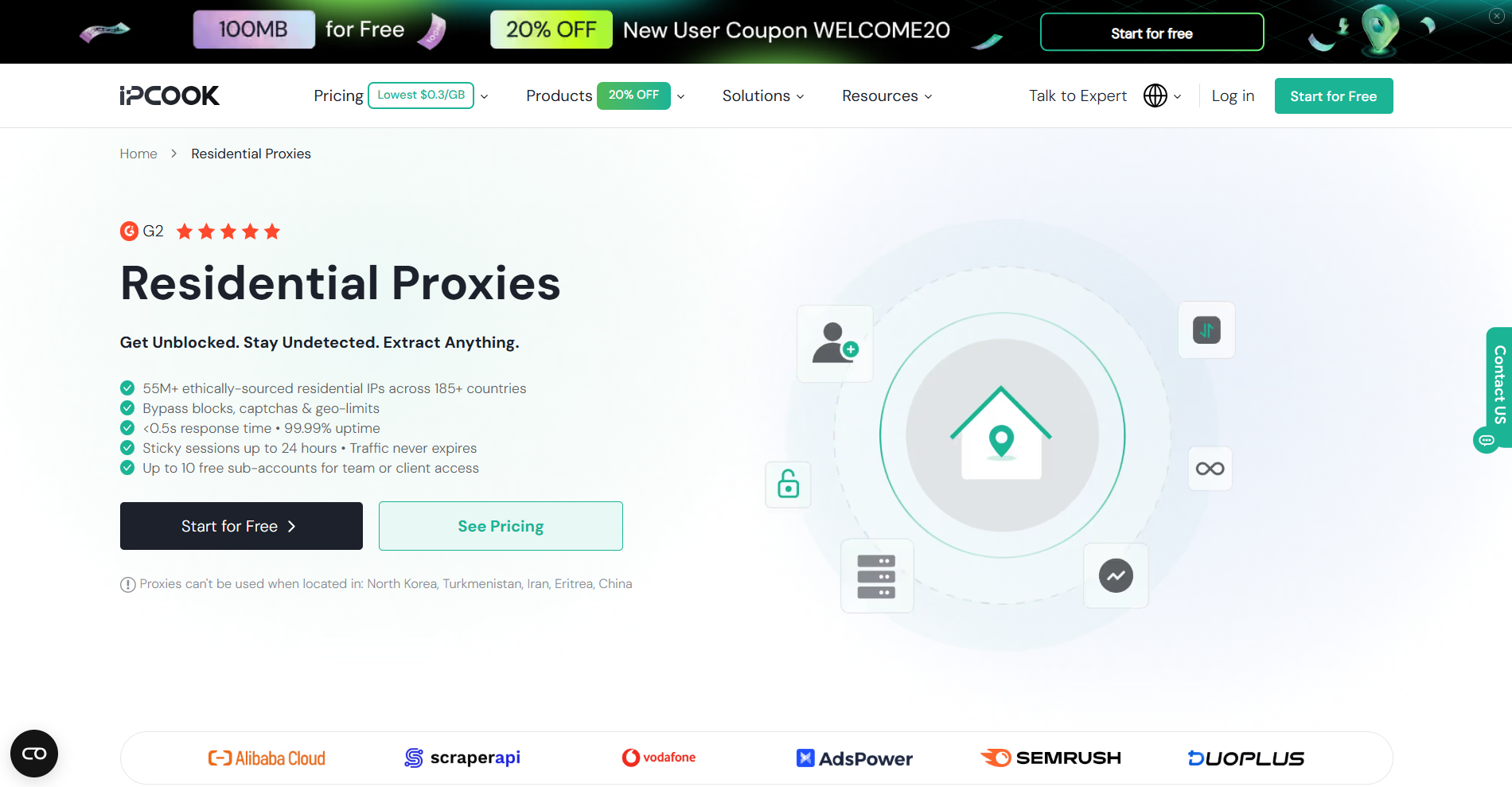
IPcook’s rotating residential proxies provide access to over 55 million IPs across 185 countries, supporting precise city-level targeting. Sourced directly from active home broadband networks, these addresses appear highly organic to target websites. This minimizes the risk of encountering security blocks and CAPTCHAs during heavy, high-concurrency scraping tasks.
These nodes are ideal for data projects requiring frequent IP rotation, such as global price monitoring and retail market research. To streamline team operations, a real-time visual dashboard allows managers to monitor traffic and bandwidth consumption across individual sub-accounts.
Key features of IPcook's residential proxies
High target-site success rates powered by real residential network routing
Default 500 concurrent threads for each account, scalable to 100,000 if needed
10 free sub-accounts for traffic allocation and management
Under 0.5s average response times for rapid data retrieval
Flexible session settings with sticky connections up to 24 hours
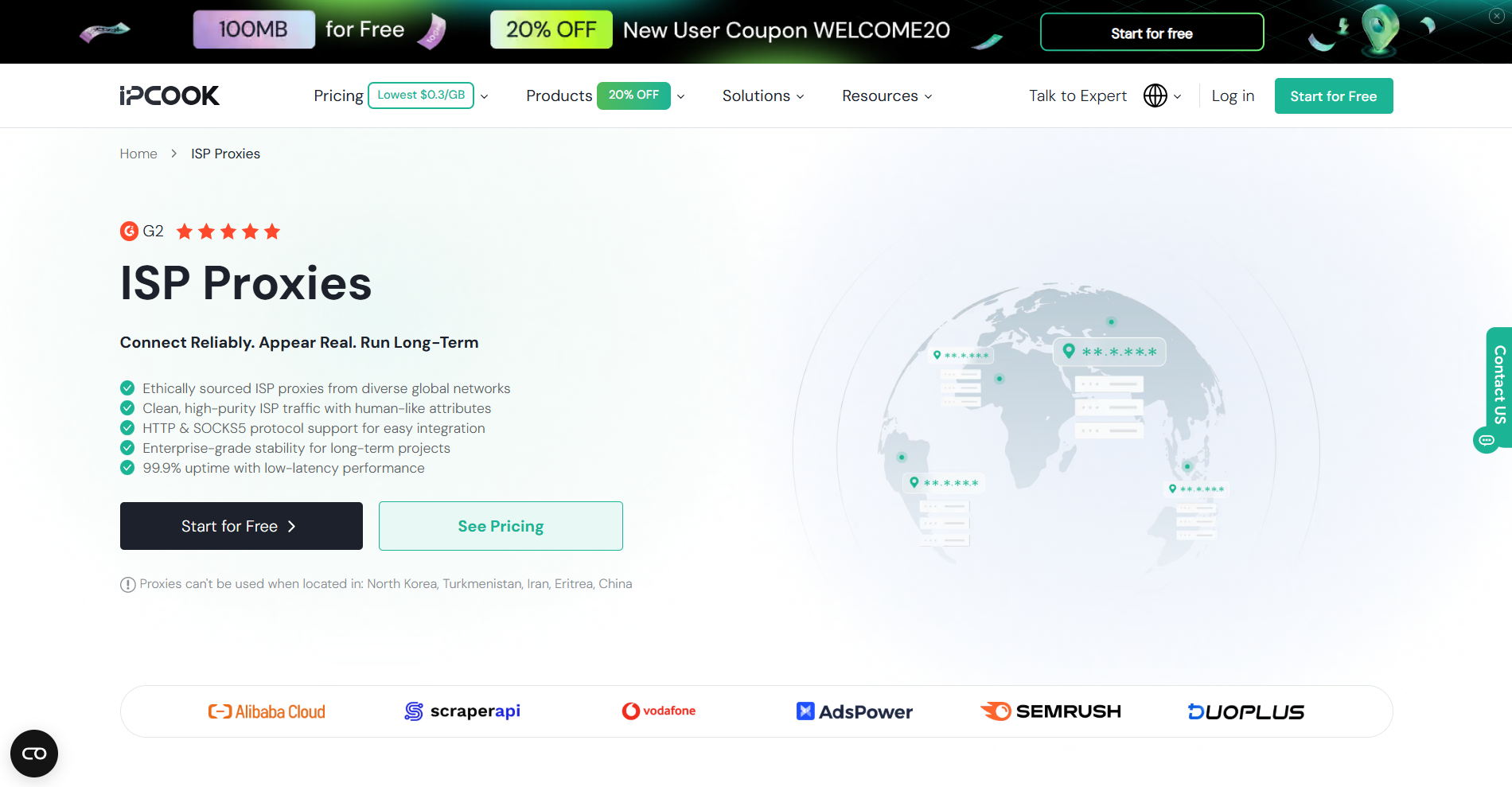
IPcook’s ISP proxies combine datacenter-level infrastructure with ISP-issued IP addresses. Sourced directly from authentic local internet service providers, these static nodes give your browser profiles a consistent, long-term network identity that does not change over time. Integrating these dedicated lines with antidetect tools like MoreLogin establishes separate, secure virtual environments.
This stable routing works particularly well for managing multiple social media profiles on platforms like Facebook, Instagram, and TikTok. Since your outbound IP address remains consistent, it helps reduce account association risks when combined with isolated browser profiles, keeping your marketing campaigns running with fewer interruptions.
Key features of IPcook's ISP proxies
Unmetered bandwidth for high-volume operational tasks
Advanced DNS customization preventing identity leaks
Stable 99.9% uptime across mainstream locations
Flexible pricing and terms with a minimum purchase of just 1 IP
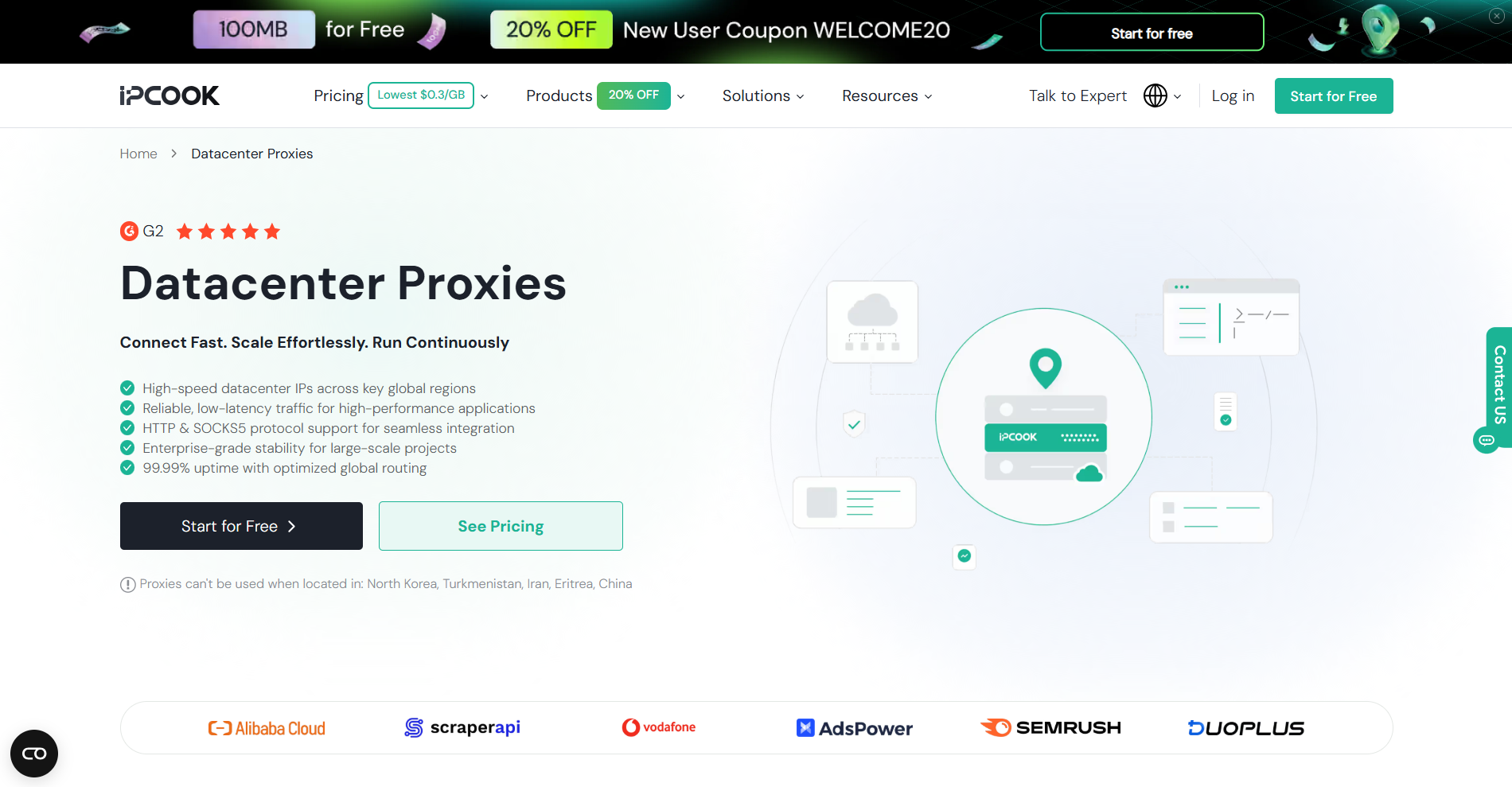
IPcook’s datacenter proxies operate on high-performance servers, delivering consistent throughput and minimal latency for high-volume data transfers. While they lack the high trust scores of residential IPs on strict platforms, they provide a stable, high-speed option for processing massive request volumes on a low budget.
These proxies work best for high-volume tasks where IP reputation is not the primary concern, such as scraping unprotected websites or running localized software tests. They offer a cost-effective choice for basic data extraction workflows and high-concurrency scripts that require maximum speed.
Key features of IPcook's datacenter proxies
Globally distributed network with 99.99% uptime
Unmetered bandwidth for high-concurrency web scraping
DNS customization for flexible workflow control
HTTP and SOCKS5 support for seamless integration
Matching the correct proxy type to your specific business goal is key to maintaining stable daily workflows. IPcook’s tailored proxy options allow teams to maintain reliable access across target platforms, ensuring smooth operations for intensive online tasks while reducing the risk of automated blocks.
Running multiple advertising and marketing profiles on platforms like Facebook and TikTok requires strict environment isolation. Pairing IPcook’s ISP proxies with MoreLogin’s secure virtual profiles helps assign stable connections to individual account profiles. This reduces account association risks and supports more consistent campaign management.
Extracting organic search results and localized rankings from Google requires proxies built for continuous queries and stable connections. IPcook’s rotating residential network lets automated scraping tools run queries from diverse IP addresses, which reduces detection risks from repeated requests within the same IP range.
Gathering inventory details, product prices, and catalog structures from major retail platforms is challenging due to strict anti-scraping systems. IPcook provides residential routing that matches organic browsing patterns on target marketplaces, supporting localized data collection so crawlers can gather large datasets without interruption.
IPcook’s residential proxies help digital marketers verify regional ad placements and detect click fraud across different territories. By simulating authentic residential user traffic, the platform allows teams to check if campaigns display correctly on local websites. This real-time validation helps businesses prevent budget waste and audit publisher compliance without being flagged or blocked.
IPcook offers flexible pricing models across different proxy types, allowing users to choose options based on their traffic needs, IP requirements, and project scale.
Residential proxy pricing is based on data usage, with costs calculated by the volume of traffic consumed. This flexible model allows users to scale their proxy usage based on project requirements, making it suitable for data-intensive tasks.
IPcook offers flexible pricing terms with plans starting at just a single IP. This lets you configure stable, static ISP nodes on demand without committing to bulk packages.
Datacenter proxies offer a budget-friendly option for users who need scalable proxy resources. This makes them ideal for cost-sensitive tasks such as website performance testing, API testing, and SEO monitoring.
IPcook delivers a dedicated proxy network for data extraction and multi-account management. By maintaining clean IP pools and optimized routing paths, the platform ensures stable, low-latency connection speeds across its global nodes. This steady uptime prevents sudden drops in requests, ensuring uninterrupted execution for teams running continuous, high-volume daily marketing workflows and automated scraping tasks.
Pairing IPcook’s ISP proxies with MoreLogin’s isolated browser profiles helps marketing teams maintain separate virtual environments and manage multiple accounts across different platforms without risking profile association. This combination offers a practical solution for businesses requiring consistent IP footprints and scalable proxy resources for long-term operations.
 EN
EN