EN

Choosing between Dolphin Anty and MoreLogin starts with the work your team needs to do: reopen account sessions, organize browser profiles, assign access, and maintain a manageable subscription.
If an account has been disabled, review the platform’s notice and the activity around the restriction first. Keep that investigation separate from the browser comparison. The useful question when evaluating a replacement is whether its features address a documented problem in your workflow.
This comparison covers profile management, team access, network configuration, pricing, and a practical evaluation process.
Save the platform’s restriction notice, the time it appeared, and any case reference. Check what the platform asks you to resolve, such as account information, a payment issue, a listing, or an access concern.
For a technical investigation, record the browser application version, browser core version, operating system, extensions, and network configuration. Preserve relevant logs before changing settings.
A useful incident report separates what happened from what might have caused it. For example, “the profile failed to reopen after an update” identifies a browser problem that support can investigate. Establishing why a platform disabled an account requires evidence about that decision.
If recovery or an appeal is available, follow the platform’s process while investigating the technical issue.
Both products provide browser profiles and tools for organizing account work. Their documentation describes different controls and plan restrictions.
Start with the functions you actually use. A solo operator may mainly need reliable profile reopening and clear account labels. A team also needs to control who can open, edit, share, or transfer a working environment.
The public pricing pages checked on November 20, 2026 list:
Sources: MoreLogin pricing and Dolphin Anty pricing.
Dolphin Anty’s pricing table also separates the Free plan from paid access to features such as the Synchronizer, scenario builder, and APIs. Check the plan containing the feature you want to evaluate.
Build the same requirement list for both products before comparing the checkout totals:
Saved profiles and profiles running at the same time.
Team members and their required permissions.
Profile sharing, transfer, and synchronization.
API or automation access.
Billing period, renewal price, and any separate network-service costs.
Use the current MoreLogin plan selector and Dolphin Anty plan selector to price that workload. Record the currency, selected configuration, billing period, and quote date.
This makes the cost difference understandable. A low entry price may cover fewer profiles or omit the team function that prompted the purchase.
The interface matters most during repeated work. Give the same operator a short task list in each application:
Create and name a profile.
Add the labels needed to identify its work.
Launch it, close it, and reopen it.
Find the profile in a larger list.
Assign and remove another member’s access, where the plan supports it.
Record the application versions, task completion time, navigation steps, and any errors. Ask the operator where they had to stop and search for instructions.
Use current screenshots when documenting the results. An interface comparison becomes useful when it shows which task was easier and where the difference occurred.
Review how each product handles access to profiles and the data stored inside them.
MoreLogin’s setup documentation describes an optional end-to-end encryption setting. The documented default is off; when enabled, access to the profile’s encrypted data depends on authorized keys and devices. Include key availability and recovery arrangements in the evaluation. MoreLogin encryption and profile settings
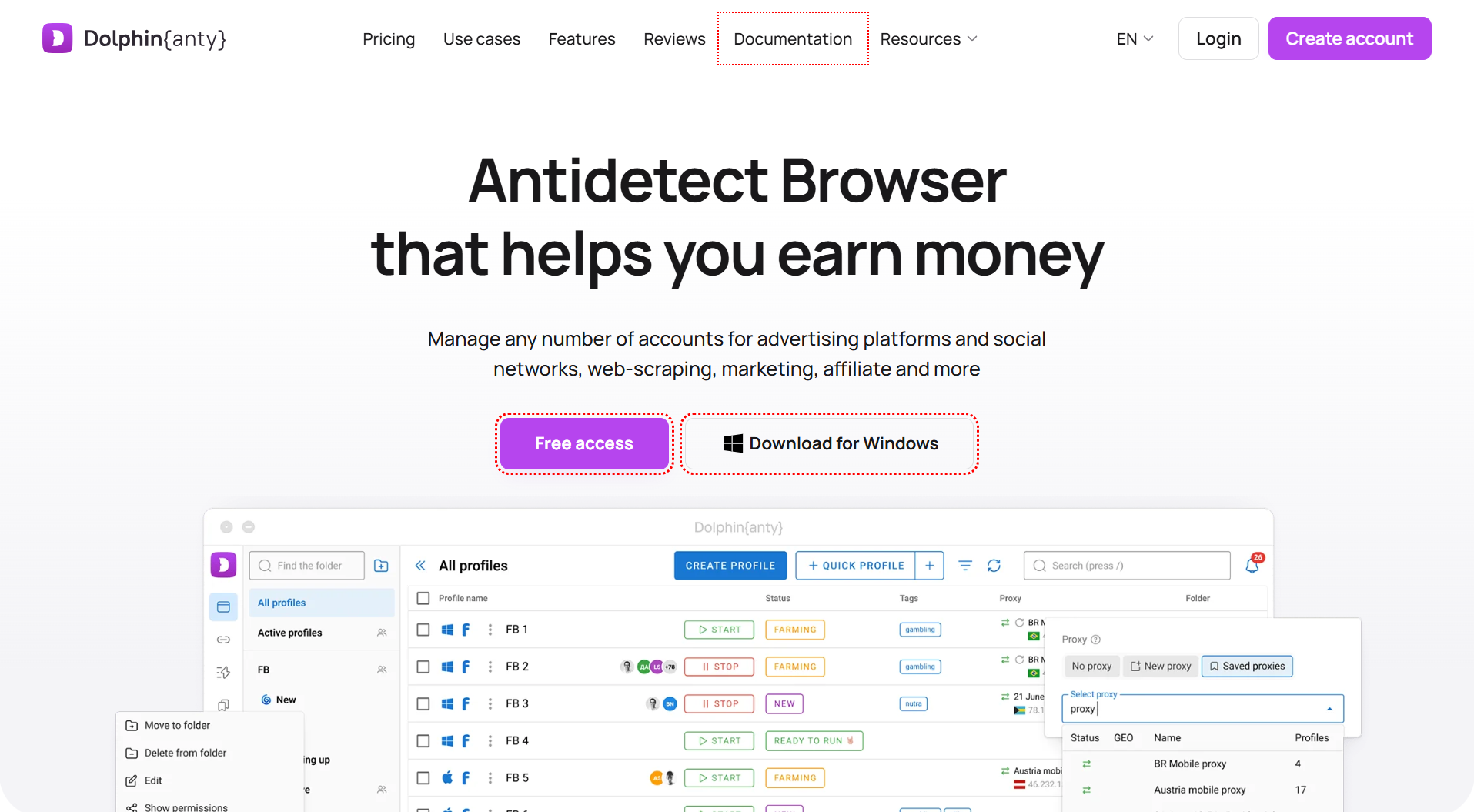
Dolphin Anty’s setup guide describes two-factor authentication for the product account and team roles for profile access. Its pricing page lists profile passwords on eligible paid plans.
For either product, check whether a staff member can perform only the intended tasks and whether removing access takes effect as expected. Review where profile data is stored, which extensions can read it, and who controls recovery credentials.
Keep browser-profile permissions aligned with the platform’s own access settings. Staff should use the account identities and business assets they are entitled to operate.
Choose a proxy when the workflow has a defined routing requirement, such as access through an organization’s approved gateway. Record the provider, endpoint, authentication method, and person responsible for maintaining the connection.
Browser profiles separate local session data. A proxy determines the route used for network traffic. Configure and troubleshoot those components separately.
During evaluation, keep the network conditions consistent where possible. If a task fails, record the error and connection details before changing several settings at once.
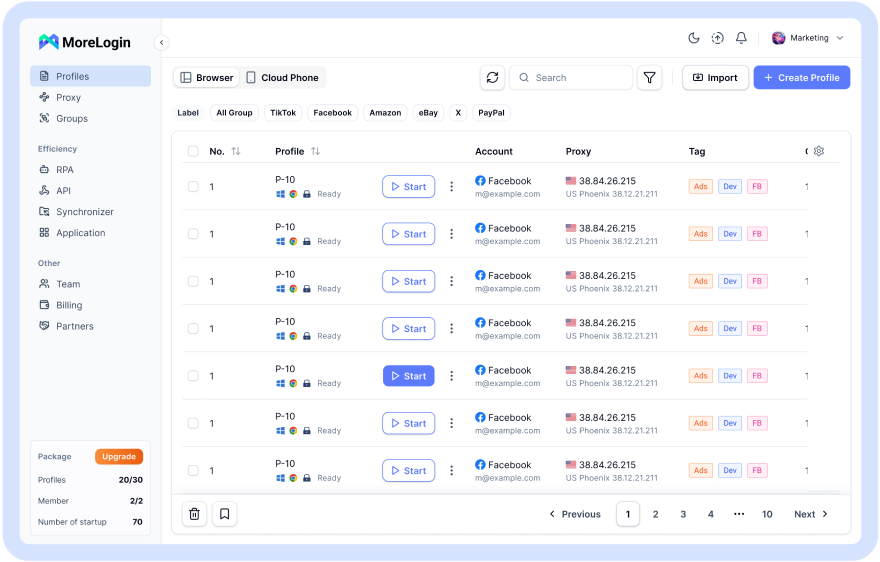
MoreLogin provides reusable browser profiles for keeping account sessions organized. Give each profile a recognizable name and connect it to a clear work assignment.
Visit the MoreLogin website and create a product account. Download the application from the official download page.
Sign in and select “New Profile.” Add a name, group, or tag that helps identify the account and its work.
Set the connection according to the actual network requirement. MoreLogin’s setup guide includes both local-network and proxy options.
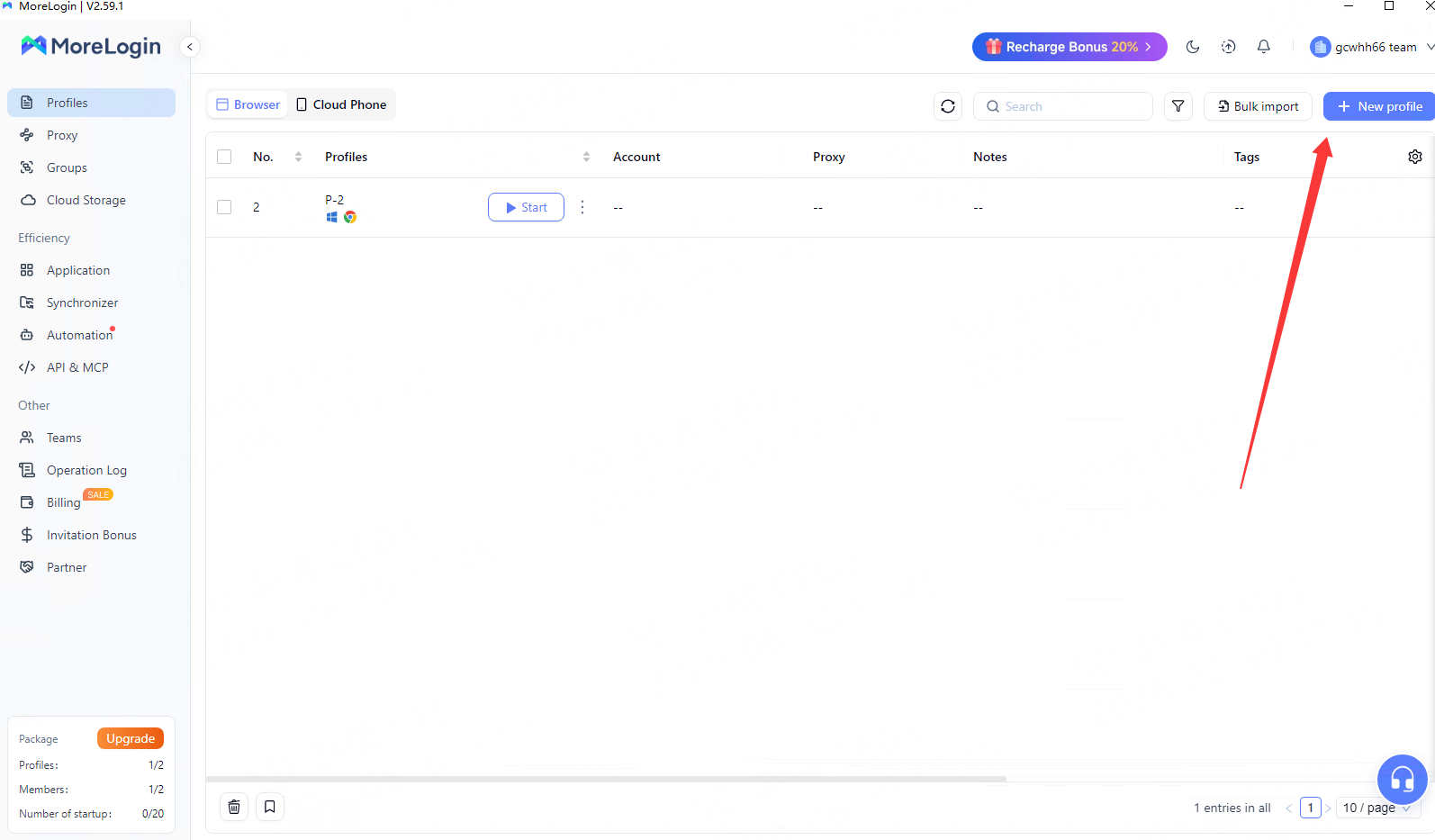
Find the profile in the profile list and select “Start.” Sign in to an account you are entitled to operate, then confirm the selected account or business asset before making changes.
Use a small set of representative tasks to check profile reopening, extensions, file downloads, and any required team permissions.
Keep a record of the application version, settings, results, and unresolved issues. Choose a paid configuration after confirming which profile capacity and functions the workflow requires.
Choose between Dolphin Anty and MoreLogin using the tasks, access controls, and subscription configuration your team needs.
Document account incidents through platform notices and technical records. For the browser decision, compare profile handling, staff access, network settings, and repeatable task results. That gives the team a concrete basis for keeping its current tool or moving to another one.
Will switching to MoreLogin restore a disabled platform account?
Account recovery follows the platform’s process. Read the restriction notice, complete the requested actions, and use the available review or appeal channel. Evaluate a browser change against a separately documented workflow problem.
How can I investigate whether a browser issue contributed to an incident?
Record the application and browser core versions, operating system, network settings, timestamps, and relevant errors. Send a reproducible technical report to the browser provider and use the platform’s notice to investigate the account decision.
What should I compare when managing several work accounts?
Check session separation, profile organization, member permissions, synchronization, and the ability to remove access. Confirm that the platform permits the account arrangement and that each operator has the required access.
Do both products offer a free plan?
Yes. Their public pricing pages checked on November 20, 2026 list free plans. Review the current profile allowances and feature restrictions before choosing what to evaluate.
Does every browser profile need a proxy?
Base that choice on the network requirement. A profile can use the available local connection or a configured proxy. Document why a different route is needed and who maintains it.
How should a team judge which browser is more secure?
Examine authentication, profile permissions, encryption settings, data storage, updates, and access removal. Test the controls relevant to the team’s work and retain the configuration and results for review.

 EN