- Product

- Pricing
- Affiliate Program
- Developers
- Resource
 EN
EN
Android cloud phone pricing is harder to compare than it first appears.
MoreLogin charges by the minute or by the device. PhoneGrid charges for profile capacity, then adds runtime fees. VMOSCloud offers several device rentals and a timing plan. Multilogin puts cloud phone minutes inside a broader platform subscription.
The lowest number on a pricing page tells you very little. What matters is the cost of keeping the devices you need online for the hours you actually use them.
This comparison uses public pricing pages, help centres, and billing documents checked on July 15, 2026. Prices are in US dollars and exclude tax.
Readers who are still getting familiar with the product category can first see android cloud phone. This guide stays focused on cost. The Cloud Phone vs Android Emulator decision changes the cost model: cloud phones use service-based billing, while local emulators shift more of the cost to computer hardware, electricity, maintenance, and staff time.
An Android cloud phone can cost nothing during a trial, less than $5 for a basic monthly device, or more than $25 per device every 30 days.
The gap comes from the billing model.
A provider may charge for:
Running minutes
Device rental
Saved profiles
Concurrent devices
Proxy traffic
Storage
Team seats
Automation access
MoreLogin, PhoneGrid, and VMOSCloud all publish a rate of $0.006 per minute for certain usage based options.
Their daily caps differ.
MoreLogin: $1.50 per device
PhoneGrid: $1.50 per device
VMOSCloud: $1 per timing device
Multilogin: no public daily cap
For short sessions, minute billing is usually reasonable. For devices that stay online for several hours a day, a fixed rental often makes more sense.
There are four pricing structures worth knowing.
You pay only while the device is running.
This suits app checks, account setup, short automation tasks, and occasional use. It becomes expensive when devices run for hours every day.
At $0.006 per minute:
1 hour costs $0.36
2 hours cost $0.72
4 hours cost $1.44
Over 30 days, four hours a day reaches $43.20 before a daily cap is applied.
You pay for one device for a set period, usually 30, 90, or 365 days.
The advantage is predictable cost. The downside is that you still pay when the device sits unused.
VMOSCloud uses this model across several device classes. MoreLogin also offers a fixed 30 day option.
PhoneGrid separates profile capacity from usage.
The plan determines how many environments you can save. Each plan includes a small number of minutes. Once those minutes run out, runtime is billed separately.
This can work well for teams that need many saved profiles but use only a few devices at a time. It is less attractive when most profiles run daily.
Multilogin combines browser profiles and cloud phone profiles inside one subscription.
Its monthly fee covers more than mobile runtime. It also includes browser environments, proxy traffic, automation access, and profile management.
That makes Multilogin harder to compare with a basic device rental. The cloud phone is only one part of the package.
Runtime matters, but it is rarely the whole bill.
A cheap device may use less RAM, less storage, or an older Android version.
VMOSCloud makes this visible through different device tiers. MoreLogin, PhoneGrid, and Multilogin publish supported Android versions, but not every provider shows the exact RAM and storage attached to each price.
That is a problem for buyers. A $4.99 device and a $25 device may not be equivalent.
Per device pricing scales quickly.
Ten devices at $25 each cost $250 every 30 days. That is before proxy, storage, and team charges.
Saved profiles and active devices are not always the same thing.
PhoneGrid uses Parallel Packs for simultaneous use. MoreLogin also supports concurrency packages. Public prices were not available in the supplied materials.
A plan with 100 profiles should not be read as 100 devices running at once.
MoreLogin and PhoneGrid do not include a proxy in the cloud phone fee.
VMOSCloud can run without a separately purchased proxy, but its official residential, mobile, and data centre proxy options cost extra.
Multilogin includes proxy traffic in its plans. Extra traffic costs $3.50 per GB.
For multi account work, this difference can outweigh the device price.
A cloud phone normally keeps apps, logins, files, and local device data between sessions.
MoreLogin starts charging $0.03 per 24 hours after a usage based device has not been opened for seven consecutive days. Fixed monthly devices do not receive that extra storage charge.
This is not the same as android phone cloud storage such as Google Drive. Cloud phone storage holds the remote device state itself.
These prices do not cover the same bundle. One plan may include only the device. Another may include profiles, proxy traffic, team access, and automation.
MoreLogin Android Cloud Phone offers both minute-based billing and fixed device rental, giving users flexibility based on how often each device needs to run.
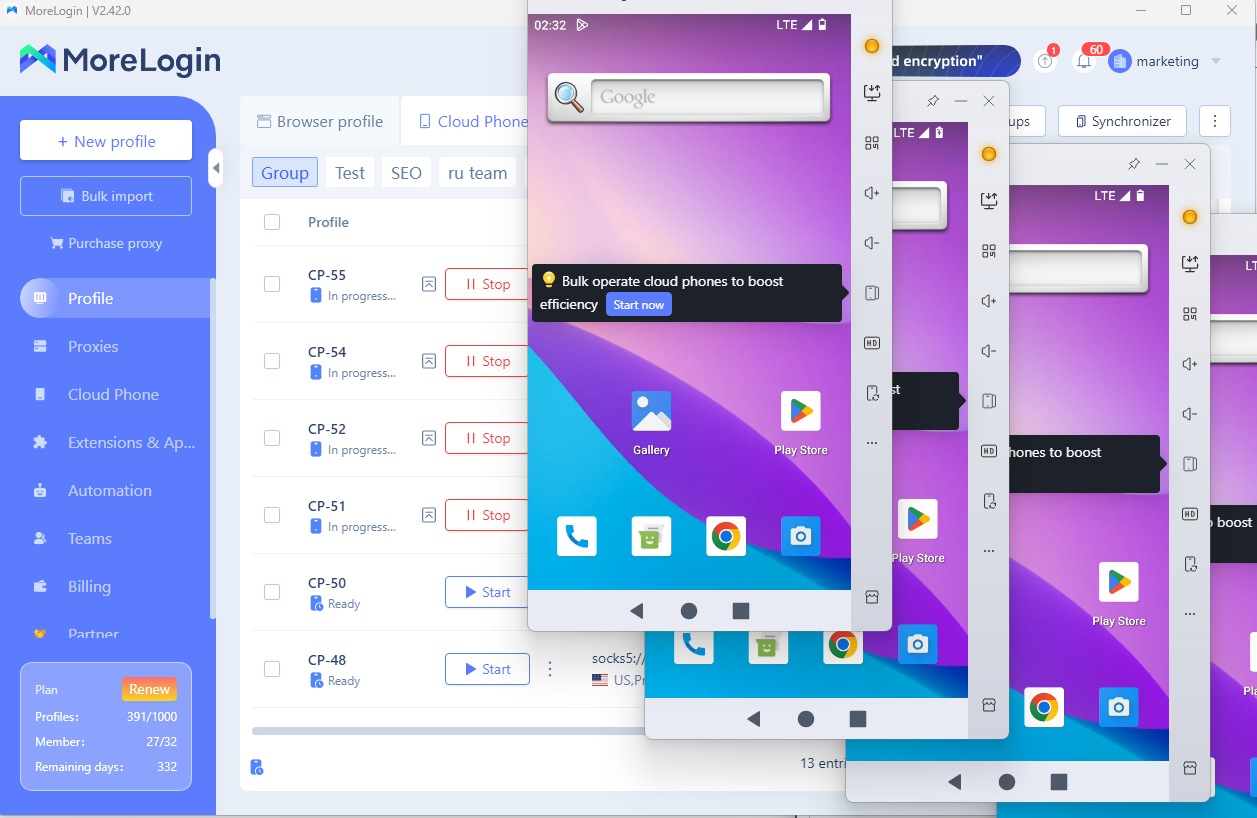
The usage rate is $0.006 per minute. Each device is capped at $1.50 per day. The public pricing page lists fixed 30 day devices at $23 to $25. The current purchase flow shows $25 for the available monthly configuration.
The free account includes:
Two browser profiles
Two users
100 cloud phone minutes
Synchronizer
Local API
Browser automation support
The fixed plan becomes easier to justify once a device runs for roughly two hours a day or more.
At two hours per day, usage billing reaches $21.60 over 30 days. At four hours per day, it reaches $43.20 before the fixed plan is considered.
MoreLogin is not the cheapest fixed device in this comparison. Its value is broader. The same workspace handles browser profiles, cloud phones, team access, Synchronizer, API, and automation.
PhoneGrid pricing starts with a permanent free plan.
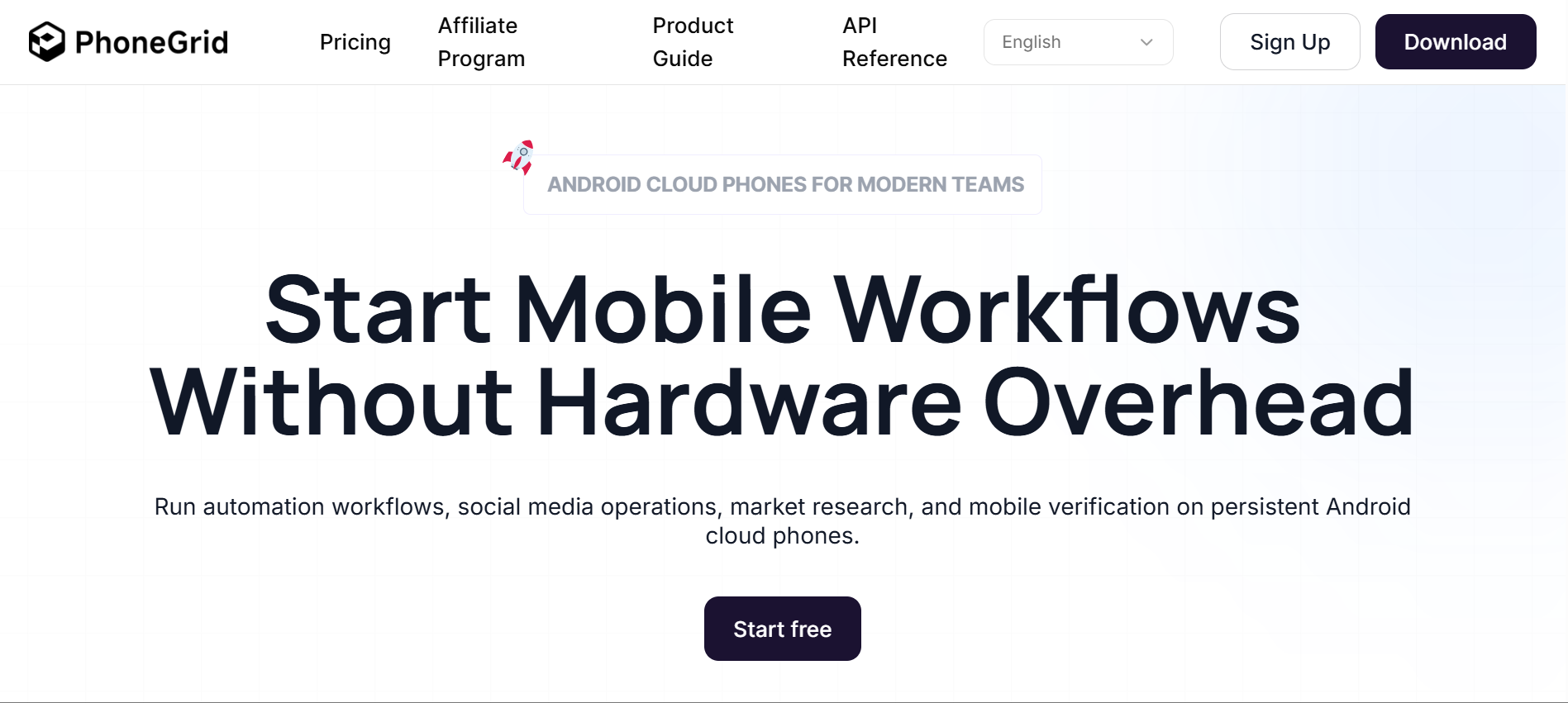
The free plan includes:
Two profiles
Two members
100 minutes
RPA
Synchronizer
Profile transfer
Operation logs
Paid packages start at $3 per month. One displayed Base setup costs $5 per month for five profiles and 50 included minutes.
After the included time runs out, each device costs $0.006 per minute. The daily cap is $1.50 per profile.
The important detail is that the package fee pays mainly for profile capacity. It does not buy unlimited runtime.
A low monthly fee can therefore be misleading when several devices stay active every day.
VMOSCloud billing shows the lowest published fixed monthly device price in this comparison.
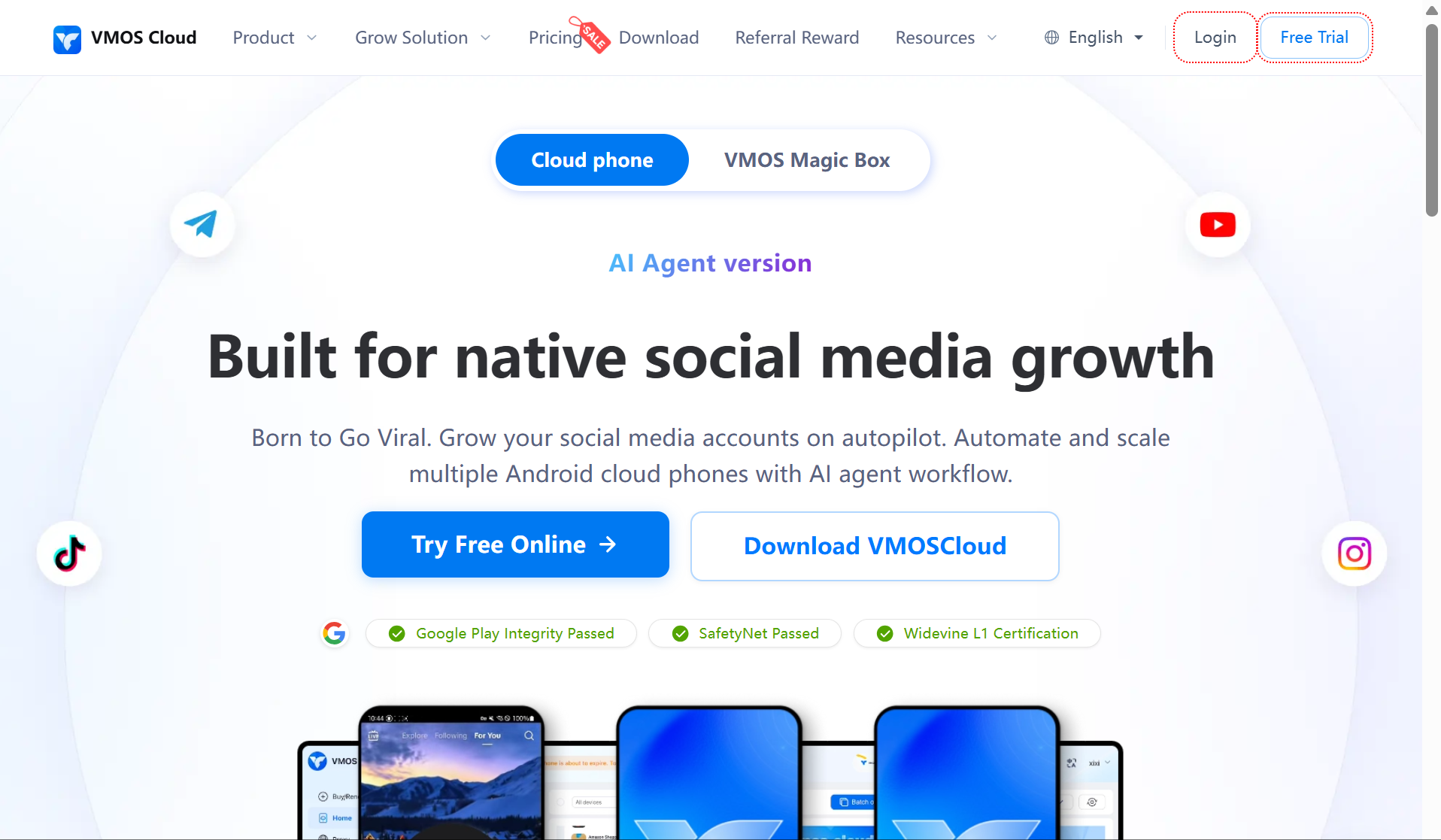
Its listed 30 day rentals include:
V08 at $4.99
V06 at $6.99
V04 at $8.99
V03 at $10.99
High end real device at $13.99
The timing device starts at $0.29 and includes 60 minutes. Further usage costs $0.006 per minute. The daily cap is $1.
Those prices are attractive, but they need context.
Different VMOSCloud plans come with different RAM, storage, and device classes. Proxy products and cloud storage are also priced separately.
VMOSCloud is the strongest option here on raw device price. It is not automatically the cheapest complete setup.
Multilogin pricing starts with a $2 trial for three days.
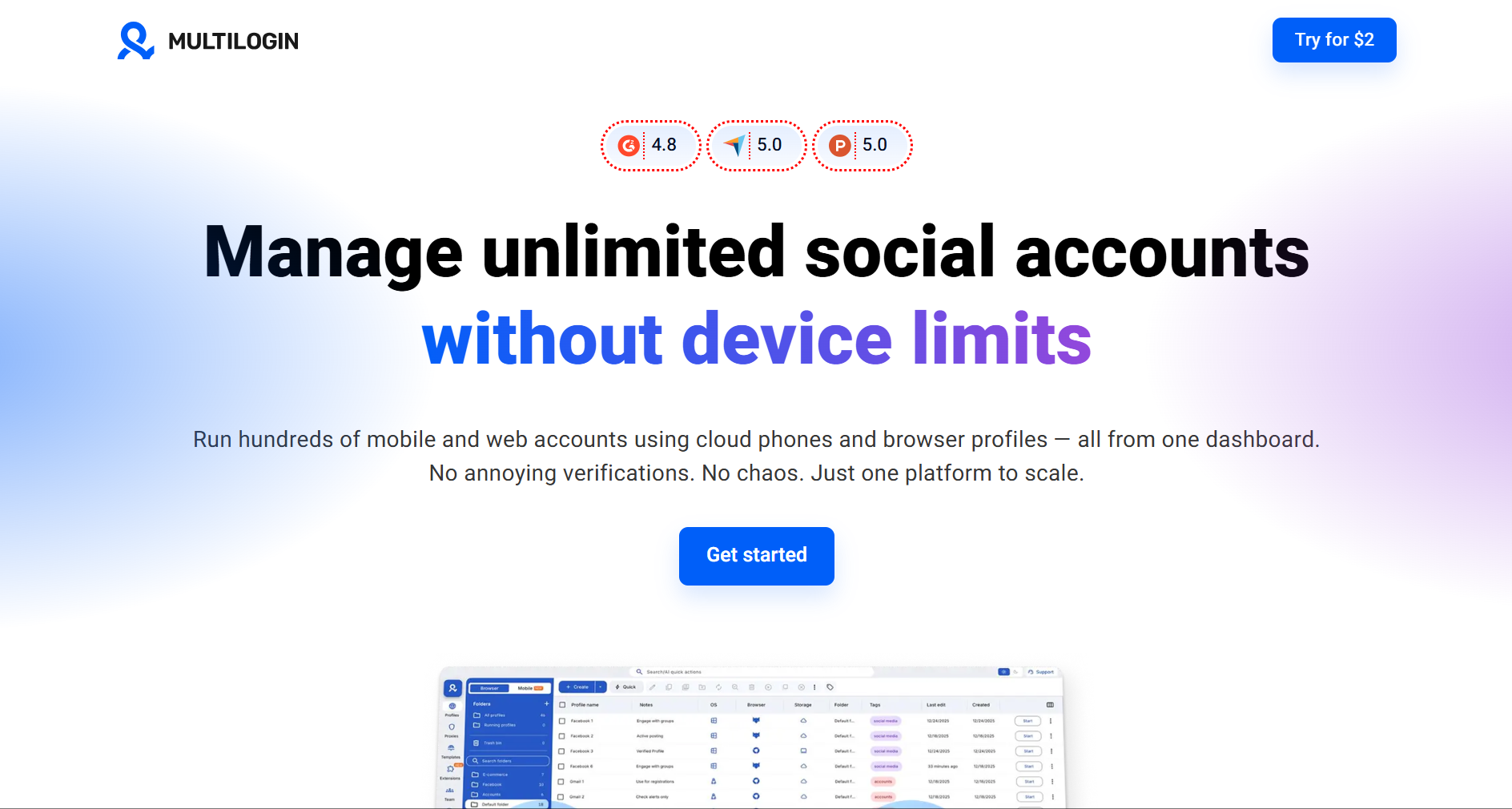
The trial includes:
Five shared profiles
60 cloud phone minutes
200MB of proxy traffic
The Pro 10 plan costs $11 per month. It includes ten shared browser or mobile profiles, 60 cloud phone minutes, and 1GB of proxy traffic.
Standard extra runtime costs $0.011 per minute. Larger minute packs reduce the effective rate to around $0.009 to $0.00732 per minute.
Multilogin has the highest standard minute rate in this group. It also includes resources that other providers charge for separately.
Its price makes more sense for users who need browser profiles, cloud phones, proxies, and automation inside one subscription. It makes less sense for someone who only wants one cheap cloud Android phone.
For a wider feature comparison, see the top cloud phone options and these cloud phone services.
Use this formula:
Monthly cost = platform fee + device rental + runtime + proxy + storage + team access + automation add ons
A MoreLogin device running two hours per day uses 3,600 minutes per month.
3,600 minutes at $0.006
Total usage cost: $21.60
The fixed plan starts at $23 to $25, so minute billing still makes sense at that level.
At four hours per day, the usage total reaches $43.20. The fixed rental is the obvious choice.
PhoneGrid needs a different calculation.
Suppose five devices each run for two hours a day.
Monthly usage: 18,000 minutes
Included time: 50 minutes
Billable time: 17,950 minutes
Runtime cost: $107.70
Base plan: $5
Total: about $112.70
That estimate does not include discounted add ons. It still shows why the headline plan price is not the real operating cost.
Start with actual runtime. Most buyers guess too high or too low.
For devices used only a few times a week, minute billing is usually safer. For devices that stay active for hours every day, fixed rental is easier to control.
Check these items before paying:
Are minutes shared across all profiles?
Does profile count equal active device count?
Is there a daily cap?
Is a proxy included?
Does unused storage create fees?
What happens when the balance runs out?
Is automation included in the base plan?
Does the renewal price differ from the trial price?
Storage rules deserve attention.
MoreLogin may charge for inactive usage based devices after seven days. VMOSCloud gives a short renewal window before device data is deleted. Multilogin keeps library files for 30 days. PhoneGrid does not publish a clear retention period on its public page.
A proper cloud phone selection process should compare the complete monthly workflow, not the first price shown on the page.
Use the free minutes first for app testing.
MoreLogin and PhoneGrid both offer 100 minutes. VMOSCloud has the lowest confirmed paid entry at $0.29 for 60 minutes. Multilogin charges $2 for a three day trial with proxy traffic included.
Fixed rental is usually the better choice.
VMOSCloud starts at $4.99 for 30 days. MoreLogin starts at $23 to $25.
VMOSCloud wins on price. MoreLogin makes more sense when the workflow also needs browser profiles, team controls, Synchronizer, and API access.
This is where cheap device pricing can become irrelevant. Teams often use one dashboard to manage Facebook and Instagram workflows across multiple mobile apps or Android apps from a dashboard.
Each account may need:
A separate cloud phone
A stable proxy
Persistent data
Team access
Batch control
Automation
Storage
Multiple cloud phones let operators launch and manage campaigns centrally, including TikTok automation workflows, while trying to stay undetected.
A low device fee does not help much if proxy, runtime, and team costs are high.
Teams should calculate profiles and active devices separately, and large teams need a reliable setup, so they should evaluate reliability, not just plan limits.
They also need to check:
Concurrent device limits
Team seats
Proxy traffic
Runtime
Data retention
RPA access
API access
Teams should also check how easily devices connect through a web interface, whether any client download is required, and whether the platform has enough power and low latency for long coordinated sessions.
Multilogin and MoreLogin make more sense in this category because they combine browser and mobile workflows. PhoneGrid also targets team operations, but its profile fee and runtime fee need to be calculated together.
There is no single cheapest Android cloud phone for every workload, and no one option fits every market equally.
VMOSCloud has the lowest published fixed monthly device price, but low sticker pricing alone does not automatically make a provider a good fit for games or cross border e commerce workflows. MoreLogin and PhoneGrid share the same $0.006 minute rate and $1.50 daily cap. Multilogin charges more per minute, but it also includes proxy traffic and a wider platform subscription.
For short tasks, compare free minutes and daily caps. For long sessions, compare fixed rentals. For teams, ignore the headline device price and calculate profiles, proxies, automation, storage, and permissions together, because those details matter.
Some services, such as Hippo Cloud, target cross border e operations, while others position cloud phones as data center-hosted devices for broader global use cases across the world.
MoreLogin is the stronger fit when browser profiles and cloud phones need to sit in the same multi account workflow. It is not the lowest priced device, but the wider toolset can reduce the need for separate software.
How much does an Android cloud phone cost per month?
Fixed monthly devices start at $4.99 in this comparison. More advanced options cost $23 to $25 per device. Usage based plans can cost less for light use and more for daily operation.
Is an Android cloud phone worth the cost?
It can be worth paying for when remote access, persistent device data, multiple accounts, or team control replace physical phones and manual work, and mobile workflows can scale without extra hardware. A casual user may not need one.
Is there a free Android cloud phone?
MoreLogin and PhoneGrid both offer 100 free minutes. These plans are useful for testing, not for continuous use.
Is monthly pricing cheaper than usage based billing?
Monthly pricing is usually better for devices that run for several hours a day. Usage based billing works better for short or irregular sessions.
Are proxies included in the price?
Multilogin includes proxy traffic. MoreLogin and PhoneGrid require a separate proxy. VMOSCloud can use a default network connection and sells other proxy options separately.
Is android phone cloud storage included?
It depends on the provider. Cloud phone storage keeps apps, files, and device state inside the remote Android environment. It is different from consumer storage services such as Google Drive, and some buyers prefer one platform for browser and cloud phone work when comparing total value.
 EN
EN