EN
EN
Pinterest is a powerful source of free traffic. The platform works well for both content managers and traffic arbitrage. Its main advantage is the ability to get tens or even hundreds of thousands of views without ad spend, complex funnels, or deep experience. Pinterest’s algorithms are volume-driven: consistent publishing delivers results faster than on most social networks.
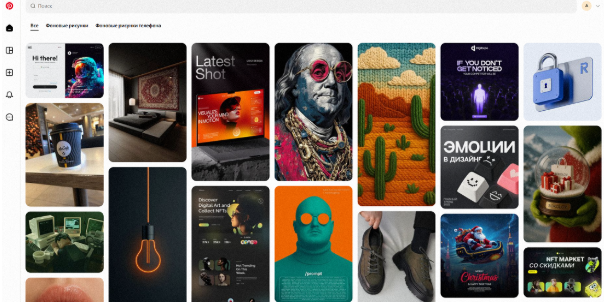
Before posting content, you need to set up your account correctly. Pinterest can generate strong organic traffic even for new accounts—but only if the platform clearly understands who you are and what your niche is.

A regular profile is not enough. You need a Business Account. It unlocks analytics, statistics, advanced settings, and allows you to connect a website—either a regular site or a virtual one—to track clicks. Without a business account, growth and monetization are nearly impossible.
Pinterest loves order. Content here isn’t published randomly—each pin must be linked to a themed board. Define your direction in advance and create several boards for your publications, such as recipes, interior design, fitness ideas, or any niche you plan to work with.
Your avatar, bio, and keywords directly affect how the algorithm understands your account. A simple, clear description with relevant keywords (motivation, design ideas, fitness content, etc.) helps you appear in search faster.
Pinterest is built for scale. The more pins you upload in the first weeks, the higher your chances of getting into recommendations. Consistency and volume give new accounts a strong старт, so it’s best to prepare content in advance.
On Pinterest, ideas—not authors—get promoted. The best-performing pins are those people want to save and share. The algorithm boosts pins that look useful or visually engaging from the first second.
Simple, clear formats work best: collections, minimalist visuals, cards with one strong message, and vertical images optimized for Pinterest. These pins get saved more often—and saves are one of the strongest signals for reach growth.
Pay special attention to video pins. Simple vertical videos made from photos or light animations often get their first views quickly and help accelerate account growth.
The core principle is simple: a clear idea + strong visual = more saves. More saves lead to higher reach and more stable organic Pinterest traffic.
Posting on Pinterest is not a one-time action—it’s continuous work with consistency. The algorithm favors accounts that publish a lot of content regularly. The more often you upload pins, the faster Pinterest understands your niche and expands reach.
The process is straightforward:
Create a pin
Add a title
Write a short description
Choose a relevant board
Publish
The pin-to-board connection is critical. Content must strictly match the board’s topic; otherwise, the algorithm won’t classify it correctly and the pin won’t reach recommendations.
Pinterest doesn’t have strict limits like other social platforms. In practice, uploading 20–50 pins per day is a normal workflow. High volume speeds up reach growth and helps you enter keyword search faster.
Working frequency options:
Daily: 10–30 pins
Weekly: one bulk upload of 200–300 pins
Both strategies work. The key is consistency and correct board distribution.
Pinterest first tests a pin on a small audience. If it gets saves and clicks, the algorithm shows it to a wider group. That’s why your main goal is to get the first saves.
To increase early engagement:
keep visuals simple and clear
use minimalism
highlight one main idea
avoid overloaded compositions
A pin may start gaining traction after a few days, a week, or even a month. With steady publishing and high volume, reach growth becomes cumulative over time.
Account creation. Have proxies and an anti-detect browser? Great—create an account, but no more than three. No proxy or anti-detect? Then get one. A good starting option is MoreLogin, which offers a trial period.
Warm-up period. Spend 3–4 days liking, following, and performing light actions. Then, for about two weeks, post around 10 pins per day in a different niche to stabilize the account.
Keyword research. Use keywords to build titles, descriptions, and hashtags.
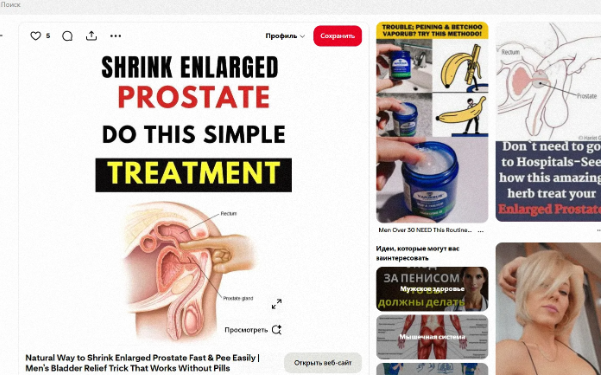
Competitor analysis. Check competitors, enter keywords in search, and see which creative approaches are currently performing best.
Success on Pinterest comes from proper account preparation. A business profile, clean setup, themed boards, and a clearly defined niche help the algorithm quickly understand which audience should see your pins. With volume, consistency, and the right visuals, Pinterest can become a stable source of organic traffic without ad spend.

 EN
EN