EN
EN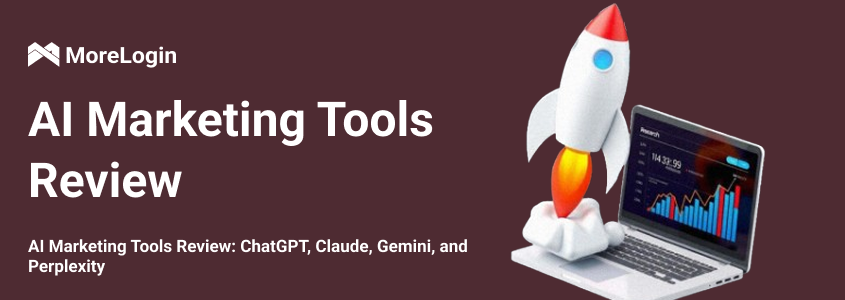
The AI tools market for marketing is evolving rapidly. Today, marketers have access to a full stack of solutions that cover content creation, analytics, research, and even prototyping. Below is a practical, experience-based overview of the most widely used AI tools, focused on real-world marketing workflows.
Perplexity Labs is a service that covers almost any typical marketing task. It can generate long-form articles with ready-made charts, build simple websites using HTML and CSS, create small apps or simple games, produce presentations, and deliver usable results almost instantly.
A real-world example: if you need a new website for an agency, you can simply provide a link to the current version and specify that you want a landing page. Perplexity scans the source, extracts company information, builds a structure, writes copy, suggests a responsive design, and adds a budget selection form. The result is a working page that can be deployed immediately. While it’s not agency-level design, the speed and convenience are far superior to manual assembly.
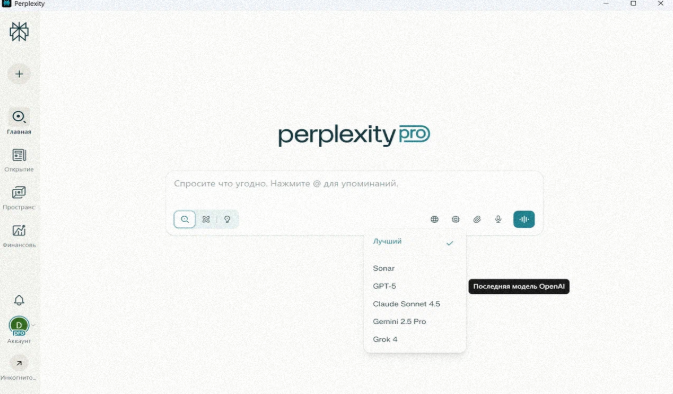
On the Perplexity start screen, you can select different AI models depending on your goal:
Claude Sonnet — best for writing and refining marketing texts
ChatGPT-4 — strong in reasoning and complex logical tasks
Gemini 2.5 Pro — ideal for research and data structuring
Grok — useful for extracting answers where other models fail
Switching between models is fast. For articles or social posts, Claude works well; for research and analysis, Gemini or ChatGPT are usually the better choice.
Perplexity allows you to generate images directly in the chat using DALL·E or Imagen. If the result doesn’t match expectations, you can rerun the prompt with another model and compare outputs.
For example, a prompt like “draw a cat wearing a hat” produces several ready-to-use images within minutes, suitable for presentations or ad creatives.
The Deep Research mode enables full-scale research projects:
you define the topic,
choose source types (websites, reports, publications, social media),
receive a structured analysis with direct source links.
Example: a query like “Best car of 2025” returns up-to-date crash test results, model comparisons, statistics, and links to original sources.
With Spaces, you can create custom AI assistants. You can upload internal documents, define response logic, attach sources, and grant access to your team.
Perplexity also offers automated topic-based digests that work like newsletters. You select a topic and time range, and the system regularly delivers updates — useful for tracking marketing trends.
Limitations include occasional latency, lack of transactional pixel support, and weaker indexing of Russian-language sources compared to English ones. Despite this, Perplexity remains one of the most versatile all-in-one tools for marketing teams.
ChatGPT is increasingly used for more advanced tasks. The GPT-5 version operates in a reasoning-based mode and supports an agent-style workflow: it can open a browser, analyze web pages, and perform multi-step actions.
With access to tools like Yandex Metrica, ChatGPT can independently analyze analytics data and generate audits. For complex research, it opens a dedicated workspace where it processes sources, documents, and pages, then produces a final report with charts and examples. Reports can be exported or shared via links.
Gemini is well suited for everyday marketing work. Conversations feel natural and don’t require precise prompts. Its deep research mode analyzes live web data effectively.
Video generation of up to 10 seconds is visually convincing, with dynamic scenes and dialogue created quickly. For images, Gemini allows precise edits to specific elements without regenerating the entire visual.
Claude excels at text creation and coding tasks. It reproduces tone and style very naturally, especially when you upload examples and describe the desired voice. For prototyping websites and scripts, Claude works quickly and reliably.
While it has limitations in agent-based actions and image generation, these constraints rarely affect content creation or development workflows.
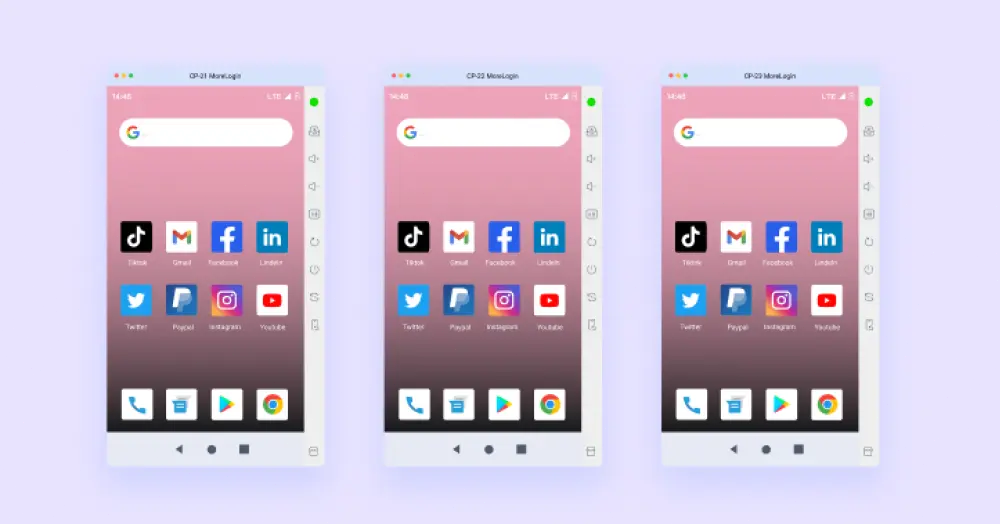
In practice, marketers often use several AI services at once. To manage multiple projects and client accounts safely, many teams rely on tools like MoreLogin to separate environments and accounts. This helps reduce risks and maintain operational stability across platforms.
If you need a single tool that covers most marketing tasks, Perplexity offers the broadest functionality. ChatGPT is better suited for deep analysis and complex workflows. Gemini is convenient for research, documents, and visual tasks. Claude is ideal for writing and programming.
Used together, these tools form a powerful AI stack for modern marketing teams.

 EN
EN