- Product

- Pricing
- Affiliate Program
- Developers
- Resource
 EN
EN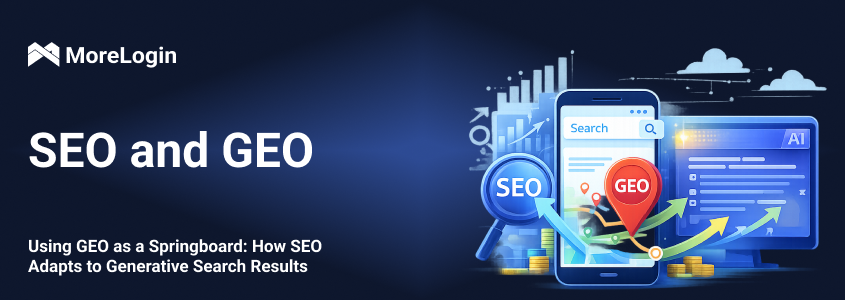
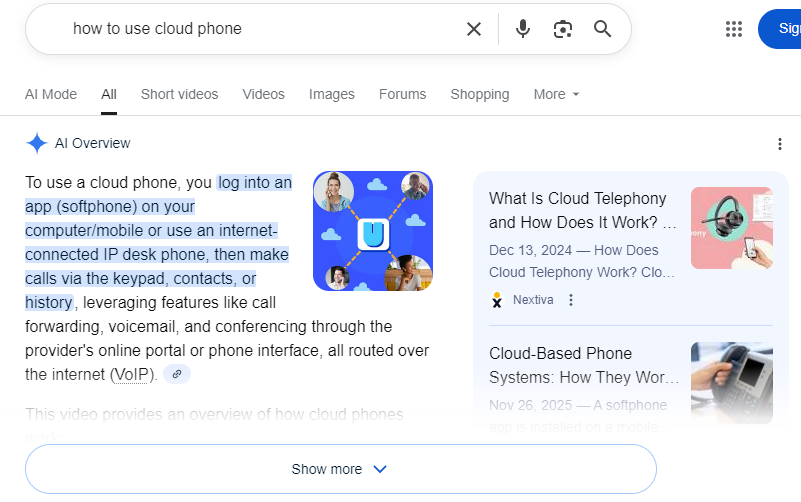
Generative models and AI-powered search formats are already reshaping the user’s path to information. Where traditional search engine results once dominated, fast AI-generated answers from platforms like Perplexity, Google AI Overviews, and Yandex now play a central role.
Users increasingly get answers without visiting websites at all. This shift directly impacts brand visibility and traffic distribution. Against this backdrop, a new promotion model is emerging — GEO (Generative Engine Optimization), designed around how large language models extract and generate information. The core idea is to create content that AI systems can easily parse, understand, and reuse when forming answers in generative search results.
For companies aiming to maintain visibility as traffic shifts from classic SERPs to AI-generated answers, GEO is becoming a critical and, in many cases, unavoidable strategy.
Query: How to choose a CRM system for a small business
A GEO-optimized content structure may look like this:
Introduction: why a CRM is necessary for small businesses.
A list of selection criteria: features, pricing, reviews, interface — with several subheadings expanded.
A comparison table of SaaS CRM solutions.
Industry-specific recommendations presented as a bullet list.
Content structured this way and optimized for systems like Yandex GPT can be used directly by AI to generate search answers and appear in “quick answer” blocks.
GEO can be treated as a practical tool for brands across industries — iGaming, financial services, SaaS products, e-commerce, and more. This approach accelerates brand perception by leveraging how generative models process information.
When a brand consistently reinforces the message that its product is a category leader across many relevant platforms, AI models such as ChatGPT, Google AI, and Yandex GPT begin to factor these signals into their responses and rely on them as reference sources.
The MoreLogin browser also plays an important role here. It enables safe and controlled management of multiple accounts across platforms, helping distribute activity, manage publishing workflows, and maintain content strategies without account-ban risks. In the GEO context, this allows teams to:
build and manage a network of profiles,
maintain consistent signals for AI models,
control the brand’s informational footprint across the web.
This mechanism creates a strong advantage for companies without high brand awareness. A dense informational environment forms around the brand, and AI models begin to treat it as a credible and authoritative source.
Expert content, reviews, and comparisons published in brand media often become data sources for generative models, increasing the chance of appearing in AI-driven answers.
Visibility in generative search helps address objections and drive clicks, especially for complex or high-ticket services such as construction, legal support, or healthcare.
Frequent brand and product mentions in AI answers increase recognition and trust, improving the likelihood of user applications after a click.
Google and Yandex often display insurance terms and document lists directly in generative blocks, creating “warm demand” even before users visit a website.
Being cited in AI overviews reduces audience skepticism and increases readiness for direct contact.
GEO strengthens brand authority, helps startups compete with larger players, and creates new touchpoints within generative search ecosystems.
From a conversion standpoint, GEO shows strong potential as a source of high-quality actions. When users arrive from a generative result and immediately complete a desired action — purchase, lead submission, or registration — that traffic delivers higher business value than metrics collected purely for analytics dashboards.
At present, GEO cannot match the scale of traditional SEO. Most users still rely on classic search engines. However, the trend is clear: generative search adoption is accelerating, and traffic from AI-driven results will continue to grow as users adapt to new search behaviors.
It is still too early to treat GEO as a full replacement for SEO, but ignoring it is no longer an option. At this stage, GEO is not an alternative but a strategic extension that strengthens overall search visibility. By aligning content with how AI systems generate answers, brands can secure high-value exposure and maintain relevance in an increasingly AI-driven search landscape.

 EN
EN