- Product

- Pricing
- Affiliate Program
- Developers
- Resource
 EN
EN
As platforms tighten anti-fraud algorithms in 2026, MMO teams are re-evaluating their infrastructure. Between CloudPhone and Phone Farm, which solution is more economical and scalable for long-term account farming? This guide compares both models across cost, stability, checkpoint resistance, and operational efficiency.
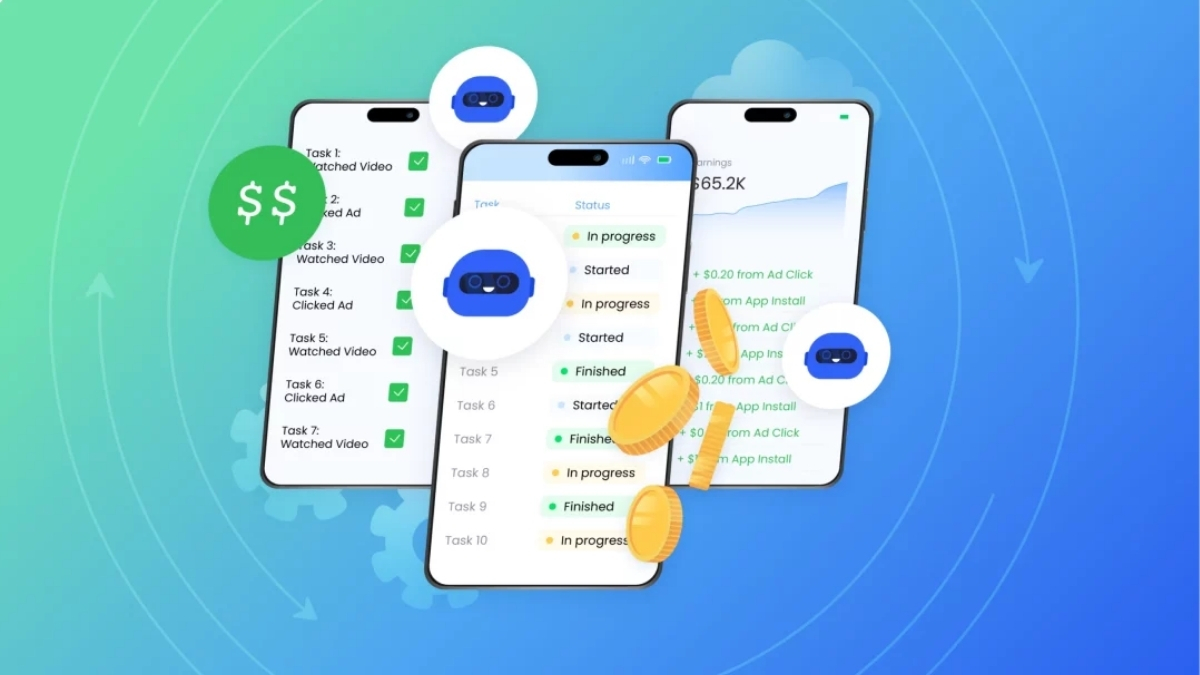
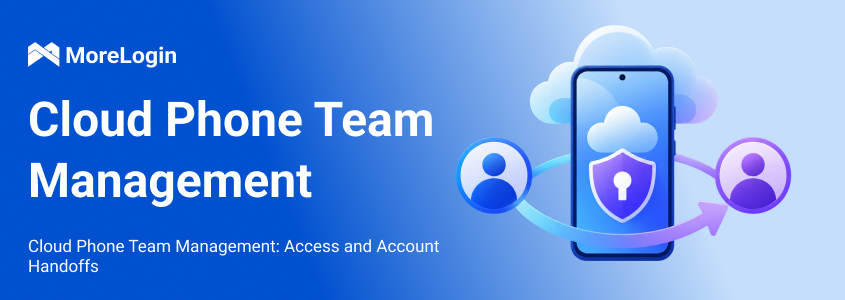
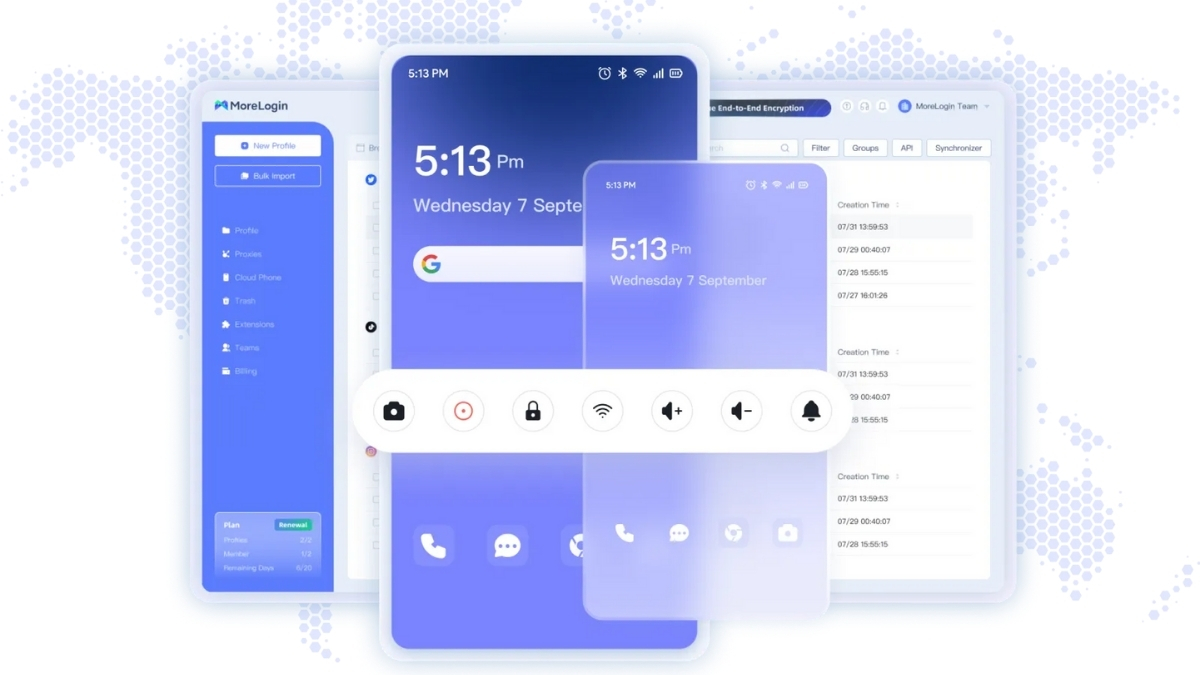
CloudPhone uses real physical Android devices hosted in data centers, allowing users to access and control them remotely via the internet. Each CloudPhone functions as an independent smartphone with its own hardware ID, operating system, and isolated runtime environment.
Unlike emulators or VPS, CloudPhone provides true device-level authenticity. Each device has unique hardware information, clean fingerprints, and no shared environment with other accounts. This makes CloudPhone highly suitable for platforms that strictly limit multi-account behavior such as TikTok Shop, Facebook Ads, Shopee, and Telegram.
According to MMO community reviews and tech discussions on platforms like Tinhte and GeeLark, CloudPhone is widely regarded as a “clean device solution” that significantly reduces checkpoints and improves account survival rates. MoreLogin CloudPhone further enhances this model by integrating anti-detect technology for long-term account farming optimization.
Phone Farm refers to using dozens or even hundreds of physical smartphones placed in a single location to run apps, manage accounts, or execute repetitive MMO tasks. This model was especially popular between 2020–2022 when platform detection systems were less strict.
The biggest advantage of Phone Farm is hardware authenticity. Operators fully control the devices without relying on third-party infrastructure.
However, in 2026, Phone Farm reveals serious limitations in cost structure and scalability. High initial hardware investment, electricity consumption, heat generation, device degradation, and the need for manual maintenance make it less efficient—especially for teams aiming to scale quickly or operate across multiple platforms.
With Phone Farm, expenses go beyond purchasing smartphones. Operating 50–100 devices requires racks, power strips, cooling systems, space rental, and increasing electricity costs. Every expansion requires additional hardware purchases, causing exponential cost growth.
CloudPhone—especially MoreLogin CloudPhone—operates on a monthly subscription model. No hardware purchase, no electricity, no maintenance, and no physical space required. Scaling from 10 to 100 or even 500 devices takes only minutes via a dashboard. Over a 6–12 month cycle, CloudPhone typically saves 50–80% compared to traditional Phone Farm setups.
Phone Farms often face overheating, lag, battery degradation, and app crashes during continuous operation. Using multiple identical device models also increases fingerprint duplication risks. Improper IP configuration can lead to shared or low-quality IPs, triggering mass checkpoints.
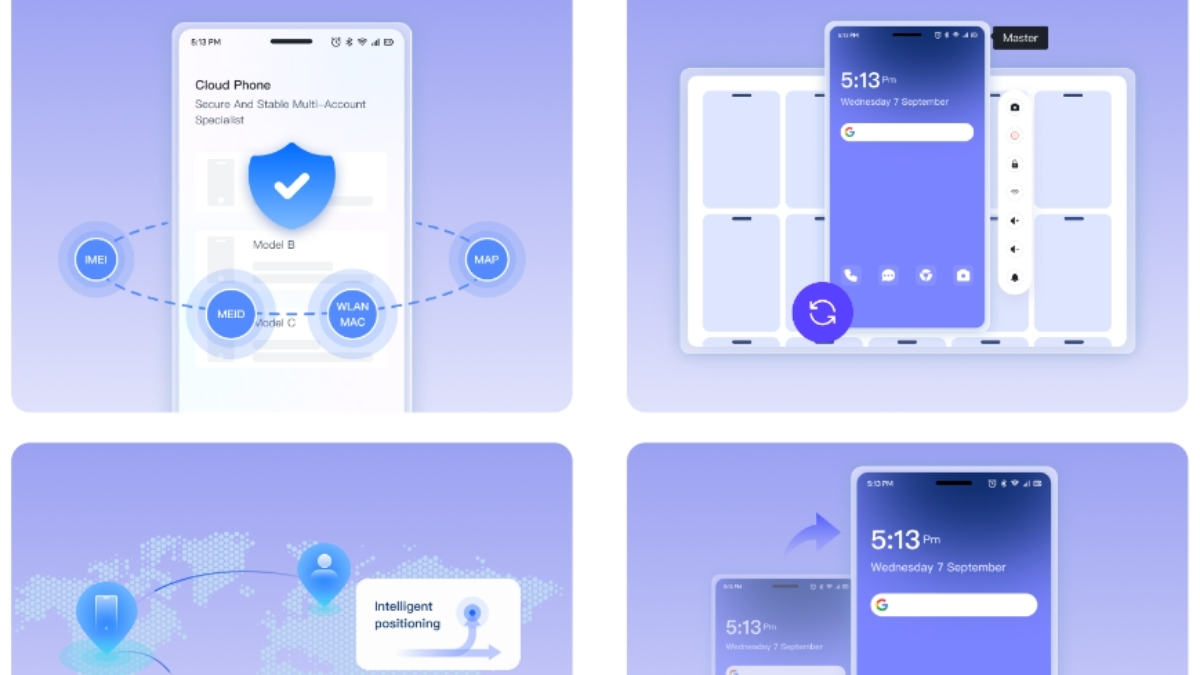
MoreLogin CloudPhone uses real Android devices housed in professional data centers, running 24/7 under optimized conditions. Each device has a unique hardware ID, deeply optimized fingerprint, and clean IP allocation by region. According to MMO community feedback (TapHoaMMO, GenFarmer discussions), CloudPhone reduces checkpoint rates by 30–50% compared to Phone Farm when running TikTok Shop or Facebook Ads.
Phone Farm requires manual monitoring of each device. Hardware failure can interrupt workflows. Account management is fragmented, and team-level permission control is difficult.
MoreLogin CloudPhone solves this through centralized management. All devices are controlled via web dashboard or app, with profile management, permission settings, and data synchronization. Backup, restore, and account migration can be done instantly—allowing teams of 5 to 50 people to operate efficiently.
Phone Farm works best for fixed app tasks and manual operations. Expanding to multiple platforms is less flexible.
MoreLogin CloudPhone supports parallel operations across TikTok Shop, Facebook Ads, Shopee, Telegram, Instagram, and more. It integrates with automation tools, bots, scripts, and antidetect browsers—making it an essential infrastructure tool for multi-platform MMO operations in 2026.
Phone Farm carries unavoidable hardware risks: battery wear, screen damage, charging port failure. Maintenance and replacement costs accumulate over time.
CloudPhone eliminates hardware risks entirely. If a device encounters issues, it is automatically replaced without interrupting operations. Users incur no repair or maintenance expenses.
MoreLogin uses physical Android devices with unique hardware IDs, ensuring no fingerprint duplication. This provides a clean operating environment, improving account survival rates and minimizing checkpoints.
MoreLogin combines CloudPhone with an antidetect browser, profile management, and local cookie encryption. This creates a closed-loop, secure, and scalable account farming ecosystem.
With deep anti-checkpoint optimization, MoreLogin has become a preferred solution for Ads teams, affiliate marketers, and TikTok sellers. It supports high-limit accounts and multi-BM setups under increasingly strict algorithms.
In 2026, MMO teams prioritize lower costs, higher stability, and reduced account loss. When comparing CloudPhone vs Phone Farm, the optimal solution depends on scale and strategy.
CloudPhone is ideal for multi-platform teams requiring flexibility, fast scaling, and efficient management. Although subscription-based, it significantly reduces setup costs, device failure risks, maintenance time, and improves large-scale account stability.
Phone Farm offers full hardware ownership but demands high upfront investment and ongoing operational expenses. It suits small teams with limited scaling needs.
Over a 1–2 year operational cycle, CloudPhone typically delivers superior cost efficiency and scalability. Phone Farm still has niche use cases, but for long-term growth and multi-platform MMO operations, CloudPhone dominates in 2026.
 EN
EN