- Product

- Pricing
- Affiliate Program
- Developers
- Resource
 EN
EN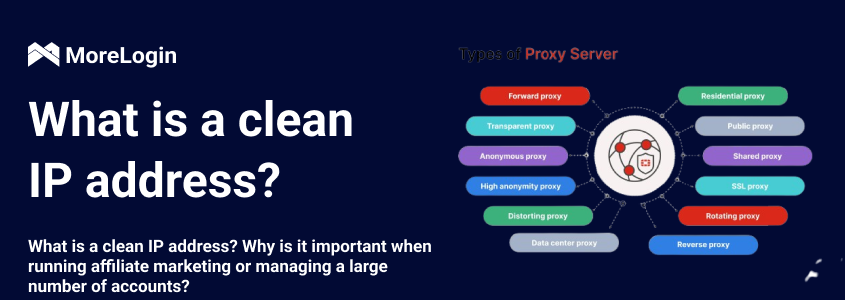
In affiliate marketing, MMO, and large-scale account farming, your IP address is one of the most important factors that determines account safety. Many people lose accounts in bulk, face ad restrictions, or get constant checkpoints without realizing the root cause is the IP they’re using. That’s why the concept of a clean IP is mentioned more and more—it plays a decisive role in building a sustainable, long-term account system. This article explains what a clean IP is and why it matters so much.
A clean IP is an IP address with a strong reputation. It is not on any blacklist and has no history of spam, bot traffic, or suspicious activity. When you access the internet using a clean IP, major platforms like Google, Meta, Shopee, Amazon, and TikTok are more likely to treat you as a real user, which reduces the risk of checkpoints or account locks.
A “clean” IP usually has these characteristics:
No history of spam reports and no links to bot activity or system abuse
Not listed on security blacklists or anti-fraud databases
Stable speed and connection, without abnormal changes typical of low-quality IPs
Behaves like real-user traffic, commonly coming from residential or mobile networks
Not shared by too many users, reducing overlap in behavior and access data
In contrast, a dirty IP is an IP that has been abused for bots, spam, or fraud—or has been used by too many people. Logging in with a dirty IP can trigger checkpoints or immediate account locks, even if the account itself is completely “clean.”

When running affiliate campaigns, selling across multiple platforms, or managing large volumes of accounts, choosing the right IP type directly affects account trust. Below are the most common IP types and their pros and cons.
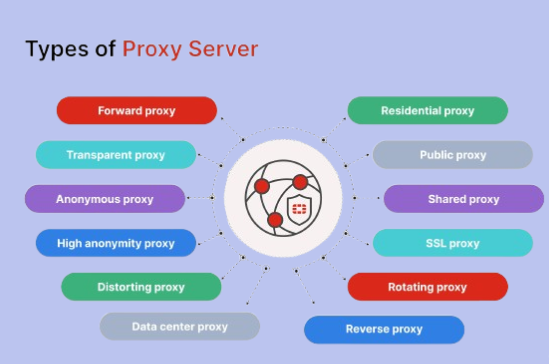
Datacenter proxies are IPs generated from centralized servers. They are fast and inexpensive. However, they don’t resemble real-user IPs, so platforms can detect them more easily, increasing checkpoint risk. They can work for light tasks, but they are not ideal for long-term account farming.
Residential proxies come from real household networks used by real people. This type has much higher reputation than datacenter proxies, gets flagged less often, and typically has better survival rates for account creation and operations. The downside is higher cost and speed that depends on the ISP—but in return, residential proxies offer significantly stronger safety.
Mobile proxies use IPs from 3G/4G/5G mobile networks. They are often considered the most trusted type of IP because platforms have a harder time detecting abnormal behavior on mobile IP ranges—these are naturally shared by many real devices every day. Mobile proxies have natural randomness, strong anti-fraud resistance, and are especially suitable for creating new accounts or operating large-scale account systems. The main drawbacks are higher cost and sometimes unstable speed.
A static IP (dedicated IP) is a fixed IP assigned to a single user. It provides very high stability, builds long-term trust, and is ideal for accounts you want to keep alive for a long time—especially ad accounts. However, static IPs are not suitable for workflows that require frequent IP rotation, and they are usually more expensive than standard proxies.
Overall, each IP type has its own strengths and weaknesses. But if your goal is safer account operations, fewer checkpoints, and a stable large-scale system, residential, mobile, and static IPs remain the best options.
A clean IP is the foundation of a stable account system. Whether you do affiliate marketing, MMO, dropshipping, ads, or e-commerce account farming, everything depends on whether your accounts operate in a trustworthy environment. A clean IP makes an account “look” like a real user, avoids abnormal signals, and significantly reduces checkpoints.
Here’s why clean IPs are critical for anyone managing multiple accounts.
Major platforms such as Facebook, Google, TikTok, Shopee, and Amazon monitor IPs very closely. An IP flagged for spam or bot activity can trigger constant verification requests. If you log in with a dirty IP, the platform treats you as high risk and may immediately trigger checkpoints or lock the account. Clean IPs reduce these risks and help keep accounts stable.
New accounts are always more sensitive and more likely to be restricted if the login environment looks unnatural. Using a clean IP—especially residential or mobile—helps the system treat the account like a real user, increasing trust from the first actions. This is crucial if you want to warm up accounts long-term or prepare them for ads and sales.
If you use the same IP for many accounts, or use low-quality IPs shared by too many users, one flagged account can pull the entire batch into checkpoints or bans. This is a nightmare for affiliate and MMO operators. Clean, separate IPs per account keep operations independent and reduce chain-reaction risk across your account system.
For ad operators, clean IPs directly affect the survival of ad accounts. Clean IP usage helps processes like creating Business Managers, ad accounts, and managing permissions run more smoothly. It also reduces identity verification requests, lowers the risk of account disablement, and improves the chance of stable spend when scaling budgets.
In affiliate marketing, many networks evaluate traffic quality partly based on user IPs. If traffic comes from dirty or flagged IPs, offers may get rejected or commissions may not be tracked accurately. Clean IPs help keep tracking more transparent and ensure campaigns are recorded correctly and considered valid within the system.
Clean, stable, consistent IPs make account access smoother, reduce login errors, and lower security warnings. For operators managing dozens to hundreds of accounts, this is a mandatory factor for keeping workflows running without interruption from checkpoints.
Identifying a dirty IP is essential when running affiliate campaigns or managing large-scale accounts. A flagged IP can make your entire system less effective—or even cause instant locks at login. Common warning signs include:
Continuous verification requests during normal logins (OTP, verification codes, CAPTCHA)
Inability to create new accounts (blocked or error at the first steps)
Ads restricted even on newly created ad accounts
Websites repeatedly forcing CAPTCHAs (“prove you’re not a robot”)
Accounts being checkpointed immediately after login
Slow or unstable connection, often caused by overloaded shared proxy pools
If you notice these signs, your IP is likely flagged and should be replaced immediately.
To ensure your IP is safe enough for affiliate marketing or large-scale account farming, you can evaluate it using several simple but highly effective methods:
Check blacklists using tools like Spamhaus or Talos: if the IP appears, it has likely been used for spam or suspicious behavior
Check IP reputation scores: reputation tools show whether the IP is good, average, or risky
Test for DNS or WebRTC leaks: leaking your real IP can trigger checkpoints even when using a proxy
Verify IP geolocation and accuracy: inaccurate or frequently “jumping” locations look unnatural and raise suspicion
Check whether the IP is heavily shared or changes too quickly: overloaded or constantly rotating IPs are typically rated poorly and increase ban risk
These checks help you choose clean, stable IPs that are suitable for long-term account operations and reduce unnecessary risk.
After understanding the role of clean IPs and how to test them, the next step is setting up a safe operating system for scaling accounts or affiliate campaigns without checkpoint risks. Ensuring clean IPs helps accounts live longer, builds trust, prevents mass bans, and improves ad performance. Below are the most practical and effective solutions.
Prioritize residential proxies, mobile proxies, or static proxies, because these IP types have higher reputation and look closer to real users. Avoid cheap or free proxies completely—they’re often heavily shared and easily flagged by platforms.
A key rule for operating large volumes of accounts is avoiding shared IPs. Each account should have its own IP to create an independent environment and prevent linkage and mass checkpoints.
MoreLogin is a powerful solution that simulates real-user environments and fully separates technical fingerprints between accounts. It supports:
Creating independent browser profiles
Assigning unique IPs to each profile
Avoiding duplicate fingerprints and cookie contamination
Simulating natural operating environments
Significantly reducing checkpoint risks when running many accounts
This is an optimal choice for affiliate marketers, MMO operators, and agencies managing large account volumes.
To keep long-term trust, avoid changing IPs too frequently and avoid spam-like or overly repetitive actions. Accounts should behave like real users with consistent access history.
Tracking, labeling, and grouping IP usage by account helps prevent confusion, ensures consistency, and reduces the risk of accidental IP overlap.
Clean IPs play a critical role in affiliate marketing and large-scale account farming. A trusted IP helps accounts remain stable, reduces checkpoints, and prevents mass bans. To ensure IP quality, use reputable proxies and combine them with an anti-detection tool like MoreLogin to isolate browser environments per account. This is one of the safest and most sustainable ways to operate a large-scale account system.
 EN
EN