- Product

- Pricing
- Affiliate Program
- Developers
- Resource
 EN
EN
Managing a Facebook advertising account is becoming a major concern for individuals and businesses as Facebook continues tightening its control through AI. In this environment, building a secure operating setup, combined with MoreLogin Cloud Phone, not only helps reduce checkpoints but also creates a more sustainable advertising system for the long term.
To manage Facebook advertising accounts effectively, understanding checkpoints is a basic step that helps advertisers avoid the wrong response strategies.
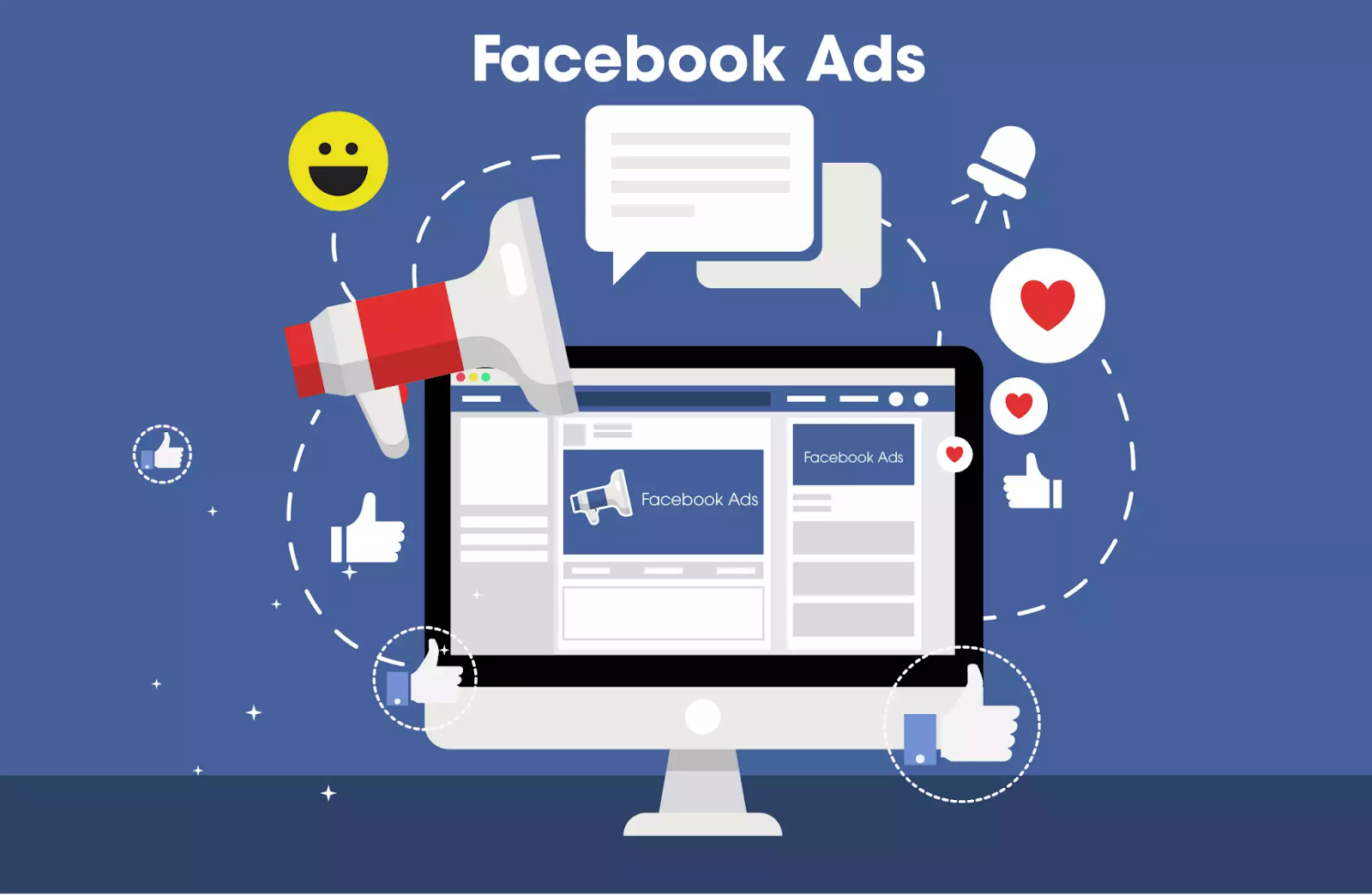
Facebook checkpoints are not simply identity verification steps, as many people assume. They are the result of a multi-layered risk assessment process carried out by Facebook’s AI system. When an advertising account is checkpointed, it means the account has been classified as having unusual activity that requires further review.
For advertising accounts, checkpoints are often stricter than they are for personal accounts. Facebook may temporarily suspend ad delivery, remove Business Manager admin permissions, or require identity verification, payment verification, and device verification. In many cases, even if the checkpoint is passed successfully, the account may still be assigned a risk score and can be restricted again in later operations.
This shows that checkpoints are not random events. They are early warning signals from the system about the trust level of the advertising account.
Facebook does not evaluate accounts based on one isolated action. It looks at a combination of behavioral data, environment, and activity history. Advertising accounts are more likely to be checkpointed because they are directly tied to money flow and payment systems, which Facebook monitors very closely.
Some common causes include logging in from multiple geographic locations within a short period, which makes the system suspect compromise; constantly changing devices, which disrupts identification data; or using the same environment for many accounts, which creates duplicate fingerprints. In addition, creating new accounts and running ads too early, or increasing budgets unusually fast, can also cause AI systems to label the account as high risk.
When several of these signals appear at once, checkpoints become almost inevitable rather than random.
Checkpoints usually do not appear instantly. They are the result of an accumulated set of risk signals. Small but repeated changes, such as switching environments, unusual login patterns, or inconsistent operations, gradually reduce trust over time. That is why long-term stability matters so much.
Consistency is reflected in many areas, including the usage environment, login habits, and campaign management style. When these factors remain stable, Facebook is more likely to view the setup as a reliable operating system, which reduces review frequency and limits unnecessary checkpoints.
As Facebook increasingly relies on long-term behavioral data, investing in a stable environment from the beginning brings clear benefits. This is also why many operators choose to build systems around MoreLogin and Cloud Phone instead of reacting only after issues happen.

After understanding the nature of checkpoints and Facebook’s risk assessment model, the next priority is the device environment used to operate the account. In reality, many ad accounts are restricted not because the ad content violates policy, but because the login environment is inconsistent, unstable, and unlike the behavior of a real user.
See also: How to Temporarily Disable a Facebook Account
Every account used to log into Facebook leaves behind a unique set of technical traces, including the operating system, browser type, hardware specifications, cookie data, login history, and in-session actions. Facebook does not evaluate these elements separately. Instead, it combines them into a fingerprint and builds an identification profile for each user and each advertising account.
When an advertising account changes its fingerprint repeatedly within a short period, the system may conclude that the account lacks stability and shows signs of unusual interference. On the other hand, if many accounts use the same fingerprint or have highly overlapping devices and behavior, Facebook may suspect an internal connection between them. Both situations reduce account trust and greatly increase the chance of triggering a checkpoint.
From an operational point of view, the device environment is not just a way to access the account. It acts as the user’s digital identity on the platform. A stable and consistent environment with a clear activity history makes the advertising account appear more trustworthy over time.

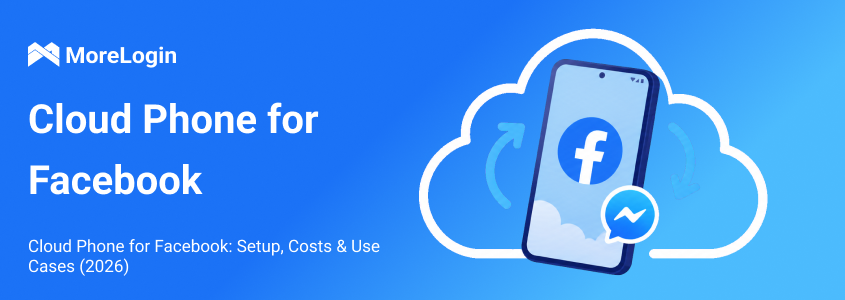
Cloud Phone is becoming an important part of Facebook ad account management as the platform increasingly prioritizes mobile user behavior. Unlike traditional emulators, Cloud Phone creates a completely independent mobile environment in which each device has its own operating system, memory, and activity history. This helps Facebook interpret the behavior as belonging to a real user rather than an automated system.
Using Cloud Phone offers a clear behavioral advantage. From swiping gestures and app opening times to ad interactions, everything appears more natural. This is something Facebook values heavily when evaluating the trust level of an advertising profile. In practice, systems that operate only on desktop often have a harder time with Facebook.
In natural usage patterns, each Facebook user usually logs into an account from only one or two fixed devices over a long period. Based on this behavior, Facebook tends to see one person running many advertising accounts from the same device environment as unnatural and risky.
Separating environments allows each advertising account to have its own distinct operating space, including login history, cookie data, and behavioral traces. This ensures that if one account encounters a checkpoint or ad restriction, the impact will not spread to the rest of the system. This is a core principle in Facebook ad account management for professional marketers, agencies, and larger ad teams.
Failing to separate environments may save time and money at first, but it significantly raises long-term system risk. When multiple accounts are affected at once, the cost of recovery, downtime, and permanent account loss is often far greater than the initial investment required to build a secure environment.
MoreLogin provides a solution for creating multiple independent browser environments on the same computer, with each one configured using its own fingerprint, browser data, and activity history. This allows operators to simulate the behavior of many different users rather than one person running multiple accounts from the same device footprint.
When configured and used properly, MoreLogin helps maintain long-term stability for each advertising account and can significantly improve trust from Facebook’s perspective. This is especially important now that Facebook increasingly focuses on device environment signals and activity history, not just ad content. Effective environment control through MoreLogin creates a more solid foundation for sustainable advertising and lowers risk when scaling systems.
Besides the device environment, user behavior is one of the most advanced layers of control that Facebook applies.
Natural behavior does not mean doing less or moving slowly. It means acting like a real person. This includes a non-fixed login rhythm, reasonable breaks, and some degree of randomness in actions.
Facebook uses AI to analyze action speed, edit frequency, and how users interact with the interface. Repetitive and mechanical patterns, actions performed too quickly, or long sessions of uninterrupted activity are often interpreted as signs of automation or an unnatural operating system.
Adjusting behavior appropriately helps advertising accounts blend into the real-user flow and reduces the chance of being monitored more closely.
One common mistake is applying exactly the same process to every account, from login times to campaign editing methods. This creates duplicated behavioral patterns that Facebook’s AI can identify easily.
In addition, over-managing campaigns in a short period, such as constantly changing budgets or repeatedly turning ads on and off, can also make the account appear unstable. These actions not only hurt performance but also increase checkpoint risk.
Cloud Phone is increasingly aligned with Facebook’s comparison model because Facebook measures behavior against a user base that is largely mobile-first.
When Cloud Phone is integrated with the MoreLogin ecosystem, operators can maintain better consistency between desktop and mobile environments. This makes the stream of behavioral data more coherent and reduces context mismatches that may trigger suspicion. It is a more sustainable approach for people who want long-term management without constantly dealing with checkpoints.
See also: Top 10 Cloud Phones in 2025
Effective Facebook ad account management is not about checkpoint avoidance tricks. Those are only temporary responses. The real solution is to build a sustainable operating system. When the device environment is clearly separated, user behavior is naturally optimized, and Cloud Phone is properly integrated into the MoreLogin ecosystem, advertising accounts become more trustworthy and face fewer checkpoints over time.
See how to build a secure Facebook advertising account management environment with MoreLogin to reduce checkpoint risk.
 EN
EN