- Product

- Pricing
- Affiliate Program
- Use Cases
- Resource
 EN
EN
The search landscape has already changed. AI-generated answers are appearing directly in search results, and the number of queries that users resolve without visiting websites continues to grow.
Companies that proactively adapt their SEO strategies to these new conditions gain a strong competitive advantage. In this article, we take a detailed look at the key B2B SEO trends for 2026 and explain how brands can adjust their strategies to remain effective in the new reality.
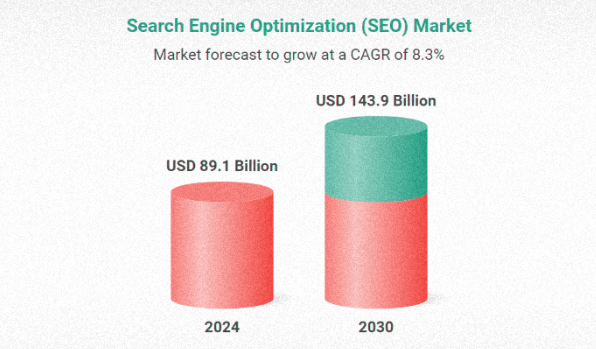
Many claim that SEO is no longer relevant, but actual data shows the opposite. The global SEO market continues to grow: valued at $82.3 billion in 2023, it is projected to reach $143.9 billion by 2030, with a compound annual growth rate of 8.3%. Moreover, most marketers rate SEO as a more effective sales channel than paid search advertising.
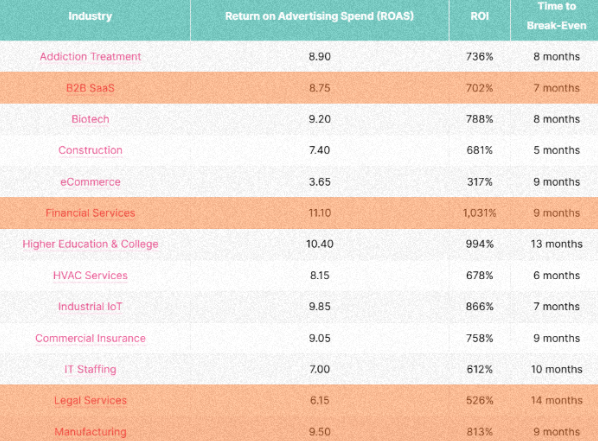
Some key statistics highlight this trend. The financial sector achieves an average ROI of 1031%, with investment payback in about nine months. Manufacturing companies reach 813% ROI within the same timeframe. B2B SaaS companies demonstrate around 702% ROI with a seven-month payback period, while legal services achieve 526% ROI with an average conversion rate of 7.5%.
Search advertising spend is expected to reach $483.5 billion by 2029. More than half of B2B marketers consider SEO an effective channel, and organic search generates more revenue than any other traffic source. As a result, SEO in 2026 is becoming less about rankings or raw traffic volume and more about real business impact.
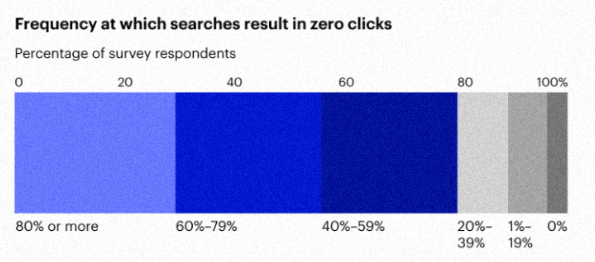
According to various estimates, around 80% of users now find the information they need directly in search results without clicking through to websites. While this reduces organic traffic, it also creates a new opportunity for B2B companies: appearing in AI-generated answers and increasing brand visibility.
Artificial intelligence does not eliminate SEO. Data from AIO SEO shows that about half of the sources used by Google in AI-generated answers come from content ranking in the top 10 search results.
Measuring SEO effectiveness in a zero-click environment requires a shift in traditional metrics. The focus moves away from clicks toward brand awareness, mentions in AI answers, and the quality of inbound leads. This approach provides a more accurate understanding of how search visibility influences real business outcomes.
The importance of E-E-A-T (Experience, Expertise, Authoritativeness, Trustworthiness) continues to grow in the B2B segment. Choosing the wrong vendor can lead to financial losses and reputational risks, making trust a critical factor. As the volume of AI-generated content increases, Google places greater emphasis on authenticity, which makes E-E-A-T especially important for companies working with corporate clients. In this environment, E-E-A-T becomes a key trust-building tool.
Research from G2 shows that 92% of B2B buyers are far more likely to make a purchase after reading credible reviews. In many cases, the first interaction with a company happens not on its website, but directly in search results, which effectively become a brand’s “second business card.”
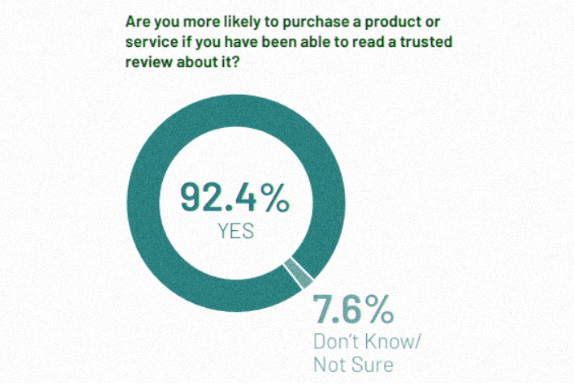
As a result, businesses must not only monitor how they appear in search results but actively manage that perception. This includes building a positive brand presence in top search results, working with reviews on specialized B2B platforms, and managing the reputation of key employees such as founders, executives, and top managers. Case studies and recommendations from real clients also play a crucial role, serving as proof of expertise and reliability.
AI is transforming SEO primarily through new visibility formats such as AI-generated answers, but this does not eliminate the need for strong content and a solid technical foundation.
By 2026, the key applications of AI in SEO include:
analyzing user intent and building content strategies around real user needs, allowing companies to create content that better matches search intent;
using machine learning models to forecast industry changes, helping businesses anticipate trends and adjust strategies in advance;
personalizing content based on audience interests through AI algorithms, which improves engagement and conversion rates.
At the same time, AI should be treated as a support tool. Its outputs require manual review and refinement to ensure accuracy and relevance.
In the coming years, SEO practices will continue to evolve under the influence of deeper intent and behavior analysis.
Keyword research is shifting away from simple metrics like search volume and difficulty toward understanding business context and the full user journey. Around 15% of daily searches are completely new queries, increasing the importance of semantic analysis. Instead of targeting broad keywords, it is more effective to create content that addresses specific business scenarios, such as system integrations or process modernization.
Link building is also changing. Since most content never earns backlinks, pages with high-quality links have nearly four times the chance of ranking at the top. Mechanical link accumulation no longer works. Link building has become part of content marketing, where trust and authority matter more than volume. By 2026, the focus will be on expert content instead of guest posting, long-term relationships instead of one-off mentions, and high-quality sources rather than sheer link quantity.
If your promotion relies on social media or multiple accounts, using a browser like MoreLogin is recommended to reduce the risk of bans and technical issues at early stages.
Demand in B2B content marketing is shifting toward in-depth materials. Long-form articles tend to attract more traffic and backlinks, but success depends on depth and usefulness rather than length alone. Effective content should support businesses at every stage of decision-making, from problem analysis to implementation criteria and performance evaluation.
Key strategic directions in content marketing include:
creating detailed guides that cover entire business processes and relevant metrics;
using real data and case studies to support recommendations;
optimizing content structure for AI-generated answers through clear wording, Q&A formats, and proper structured data;
demonstrating expertise through original research, industry analysis, and unique insights.
Start by evaluating existing content through the lens of E-E-A-T, focusing on demonstrated expertise. Integrate AI tools into daily SEO workflows to speed up data analysis and simplify processes. At the same time, update key pages to ensure they can appear in AI answers and rich snippets, increasing visibility in zero-click search results.
Once the foundation is in place, move on to SEO initiatives focused on key accounts and content tailored to diverse user segments. Using multiple content formats helps cover every stage of the customer journey. This stage also includes adapting messaging to specific industries, roles, and business challenges.
Finally, the strategy requires continuous performance evaluation. Analyze rankings, CTR, organic traffic trends, query structure, and the impact of changes on lead generation. These insights provide the basis for refining the strategy and strengthening the most effective directions. Processes that prove successful with AI support can be scaled, while advanced personalization based on user behavior and previous interactions helps improve relevance and conversion rates.

 EN
EN


.png)