- Product

- Pricing
- Affiliate Program
- Use Cases
- Resource
 EN
EN
Teaser networks are one of the oldest tools in traffic arbitrage. They appeared long before modern ad formats and are still actively used today. But can teaser traffic still deliver stable profit? And are push ads still a viable channel in 2025? This article takes a closer look.
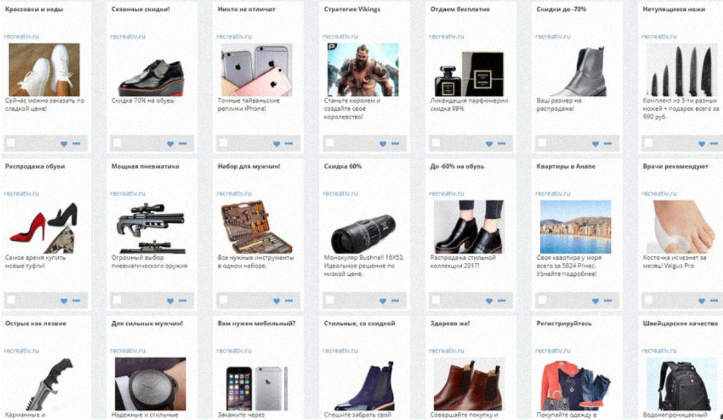
A teaser network is an advertising platform that uses teaser-style creatives. You’ve definitely seen them before: bright images or short GIFs paired with provocative headlines designed to grab attention and drive clicks. These ads most often appear on news portals, entertainment sites, and adult platforms.

Teaser networks typically operate on two payment models:
CPM (cost per thousand impressions)
CPC (cost per click)
For webmasters, teaser ads remain a valuable monetization method—especially when a website does not pass moderation in Google AdSense or Yandex Advertising Network. On most platforms, these ad blocks fit naturally into page content and often generate high CTR, making them a profitable alternative to traditional banners.
For media buyers, teaser networks are appealing due to their low entry barrier and lenient moderation. Many offers—especially nutra—can run without cloaking, and CPC prices are significantly lower than in contextual advertising. The audience rotates constantly, allowing for regular testing of new funnels and maintaining stable traffic volumes. Even though lead quality may be lower compared to Google, teaser networks remain one of the simplest and most affordable channels for beginners in traffic arbitrage.
The process begins with choosing the right vertical. If you’re new to arbitrage, news-based nutra landers are a good starting point: competition is lower, and traffic costs in Russian teaser networks are often noticeably cheaper than in e-commerce verticals—sometimes by as much as 50%. The native format ensures strong CTR and affordable testing.
Next comes GEO selection. For beginners, it’s more efficient to start with lower-cost countries that still provide moderate traffic volume. This allows you to test a funnel and optimize without burning your budget.
You’ll also need the right software setup. When running multiple accounts and traffic sources, account safety becomes critical. Tools like the MoreLogin anti-detect browser allow you to create isolated profiles with unique digital fingerprints, helping maintain stable operations without losing accounts or collected data.
Teaser networks allow targeting based on site categories. Because of this, campaigns can be structured in two ways:
With a large budget — test all available categories, then disable weak performers.
With a small budget — launch only on categories closely related to your target audience and gradually expand.
Creative requirements have also changed. Moderation today is far stricter than before. Teaser ads were long associated with provocative imagery and clickbait headlines, leading many publishers to ban explicit or aggressive content. However, familiar formats like “miracle products” or “nighttime soda hacks” still perform well—if adapted to current guidelines and trends. The advertiser’s task is to balance compliance with attractiveness.
Teaser networks continue to be relevant in traffic arbitrage due to low traffic cost, flexible moderation, and opportunities for additional monetization.
Demonetization tools, such as push-subscription monetization, help recover part of the testing costs. Even if the funnel is breakeven or slightly negative, extra monetization can stabilize results.
News traffic is especially profitable: in some networks, a click can cost less than one ruble. Under CPM pricing, high-CTR creatives can reduce expenses nearly by half compared to CPC. This makes teaser networks suitable for testing offers even with very limited budgets.
Despite stricter moderation, teaser networks are still more tolerant of provocative elements. This gives room for creative experimentation—ads can be emotional, eye-catching, and still remain within acceptable guidelines.
For beginners, teaser ads are simple to start with. All you need is a tracker and suitable creatives, which can be made from existing images without heavy editing. In news formats, natural photos often outperform overly polished images.
Another advantage is the availability of macros—dynamic variables that insert user data into the ad text.
For example: “Meet women in [CITY]” will automatically display the user’s real city, increasing relevance and boosting CTR. Combined with GIF animations, these creatives deliver strong engagement and steady click volumes with minimal costs.
There are also notable drawbacks to consider.
The biggest issue is the high level of bot traffic.
Bot activity exists in all ad platforms, but teaser networks suffer the most. Since they’ve existed longer than most other traffic sources, dishonest webmasters have developed multiple methods for generating low-quality clicks. Installing a click-fraud script is simple, and arbitrage teams from Tier-3 regions often exploit this, heavily distorting statistics.
Another disadvantage is limited targeting. Unlike Google Ads or Facebook Ads, teaser networks do not allow precise interest or behavior targeting. Even when limiting campaigns to specific categories, traffic remains mixed, and part of the budget goes to uninterested users. Some networks claim to offer targeting by gender or age, but in practice this is usually more of a marketing tactic than a reliable tool.
The teaser format itself also imposes restrictions. You are limited to one image and a short headline—usually up to 80 characters. This reduces creative flexibility and forces careful selection of visuals and wording. GIF animations help increase engagement, but not all networks support them.

Additionally, teasers are often displayed in blocks of four or five. If you are not buying the entire block, your creative competes with others—some of which may be more colorful or more click-optimized.
Teaser networks remain an interesting but imperfect source of traffic arbitrage. To achieve stable results, advertisers must account for bot traffic, limited targeting, and format restrictions. Careful analysis, continuous optimization, and competent creative testing are essential for success in this channel.

 EN
EN



.png)